
I have to admit something: rainwater harvesting has never been a concern of mine. I have my own well at home, I’ve never had any watering restrictions, and honestly, I never even thought about it. Why make life harder for myself when water flows freely as soon as I turn on the outdoor faucet?
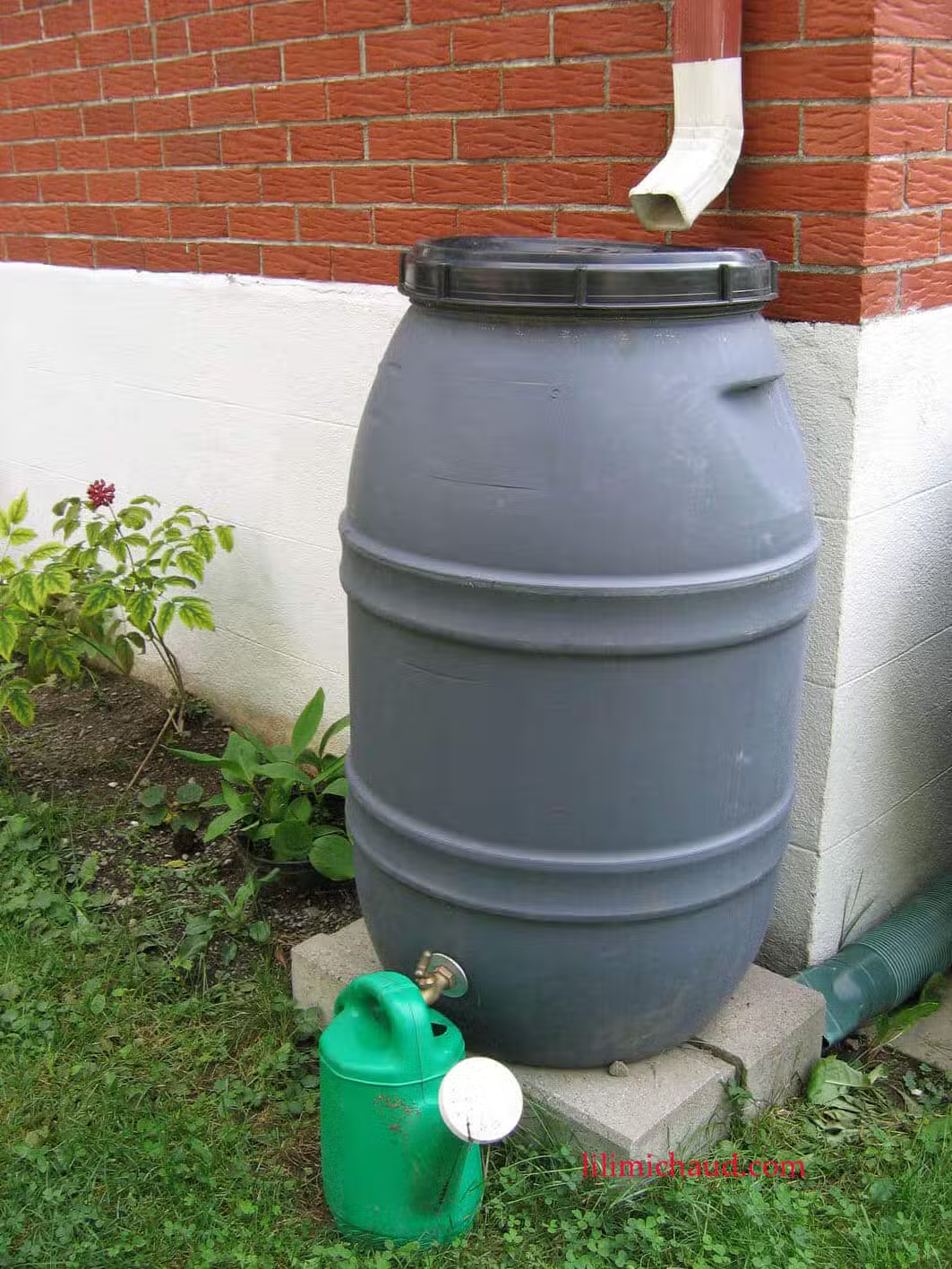
And then I got my greenhouse. Suddenly, I had a large area to water, protected from the rain, which meant I had to drag the hose quite a distance and bring it back every time, because the greenhouse is on the other side of my driveway and you don’t want to run over a hose lying on the ground! So we installed gutters on the greenhouse roof. It worked out perfectly—someone had given me a rain barrel that wasn’t being used!
But the real turning point—the one that made me want to tell you about this—was a woman from my village who suggested I write an article on the subject. And she was absolutely right, because in my area, we have a lake, and that lake has major problems with sediment and runoff. The rain that pours down on our roofs and driveways doesn’t just magically disappear: it flows, it forms rivulets, it carries away soil and other materials—sometimes less desirable ones—and it ends up somewhere!
Here, it ends up in the lake.
Water comes from the faucet
OK, but Audrey… let’s say I don’t have a problem with my hose lying around, and I don’t have a lake. Why would I do that?
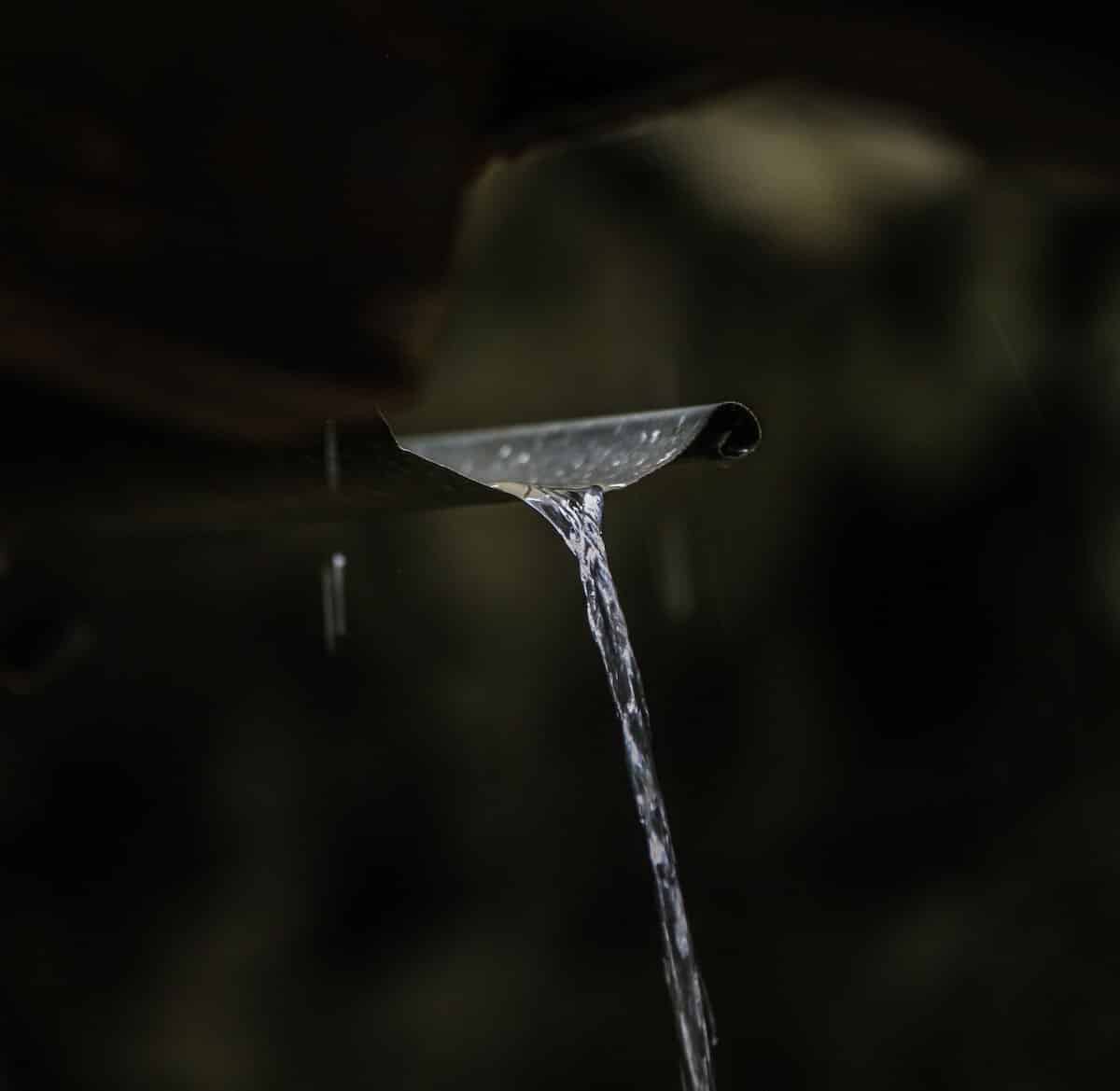
I know, I know… Let’s face it: in much of North America, especially in Canada, water can seem plentiful. Canada has an extraordinary abundance of freshwater, and lakes and rivers are everywhere. In many Canadian municipalities, household water use is included in municipal taxes or charged at a flat rate rather than billed according to how much you actually use. In much of the United States—and increasingly in Canada—water meters are more common. Either way, when clean water flows freely from the tap, it’s easy to take it for granted.
So why bother collecting rainwater? For one thing, even places with abundant freshwater can face water-use restrictions during hot, dry periods. If you rely on municipal water, you may wake up one summer morning to find that outdoor watering has been restricted. And if watering your 200 tomato plants by hand with a watering can in the middle of a heat wave sounds exciting to you… well, you may be less lazy than the average reader of this blog. Personally, I think I’d abandon the garden!
But convenience isn’t the only reason to collect rainwater. There are also several good environmental reasons to do it.
The concept, in a nutshell
The concept is simple: a large surface—the roof of your house, garage, or greenhouse—collects rainwater, and a gutter directs it into a rain barrel. From there, you can connect a hose or fill your watering can directly. If the barrel sits at ground level, you may need a small pump to get enough water pressure through the hose (embracing laziness, you know). Raise it off the ground, though, and gravity does the work for you.
I won’t go through the entire construction process here. My colleague Lili Michaud has already published an excellent step-by-step guide, complete with a materials list, tools, and detailed instructions. If you’d like to build your own, you can find everything you need right here.
Instead, I want to focus on why we should bother collecting all that rainwater in the first place.
All that water—where does it actually go?
Rain falls—at least in theory—fairly evenly across the landscape, allowing each square foot of soil to deal with its own little share of water during a heavy downpour. But your gutters collect all the water falling on your roof and funnel it through a downspout onto one small area of your yard. Spoiler alert: that little patch of ground takes a beating!
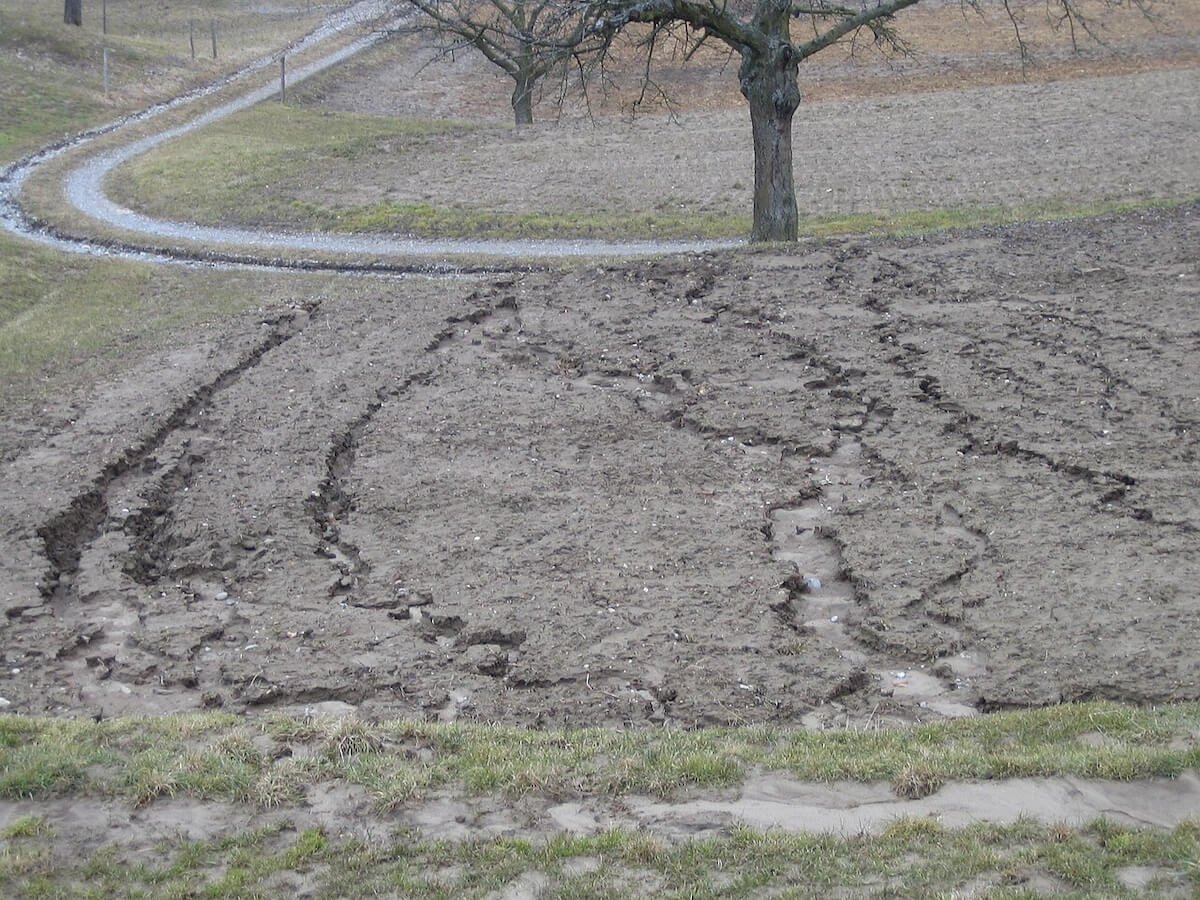
The first and most obvious problem is that the soil directly beneath the downspout gets hit with a HUGE amount of water. The typical result? Soggy, muddy lawn, sometimes with a completely bare patch. Waterlogged soil leaves less oxygen available to roots, while bare soil is an open invitation to erosion. If your yard has even the slightest slope, water repeatedly pouring onto the same spot can gradually carve out a little channel. With every heavy rain, that channel can grow, carrying soil away and causing erosion farther downslope.

Put a plastic duck out just for fun and see which neighbor it ends up at: it might end up going a long way!
Second problem
Any fertilizers, pesticides, soaps, and other products lying around your property can also hitch a ride with runoff. Washed your car recently? If a downspout empties onto your driveway and the water continues flowing from there, that soap could end up in your garden beds—or even in a nearby stream, pond, or lake—where it can harm aquatic life.
And finally, all that water running off instead of soaking into the ground often ends up in a storm drain. In many older communities across North America, stormwater and sanitary sewage still share combined sewer systems. During heavy rainfall, these systems can become overwhelmed, resulting in combined sewer overflows: a mixture of stormwater and untreated sewage released directly into the environment. Yes, that includes exactly what you think it includes. And no, it won’t do the same job as manure!
A single rain barrel isn’t going to solve a citywide stormwater problem. But every downspout that doesn’t dump its entire flow into the drainage system all at once can make a small contribution toward reducing the strain during the heaviest storms.
So no, rainwater management isn’t just about avoiding a miniature stream beneath your downspout—or a small lake in the middle of your yard. Whether you live in the city, the suburbs, or the countryside, managing where the water from your roof goes helps protect your own property while also reducing pressure on infrastructure and nearby waterways.
A bonus for your plants
And here’s the cherry on top: rainwater is generally a little more plant-friendly than tap water. It’s naturally soft and usually slightly acidic, which can make certain nutrients, such as iron, more readily available. Municipal water, depending on your local supply and treatment system, may contain chlorine or be relatively hard, which isn’t always ideal for more sensitive plants. (Maybe I’m one of those sensitive-rooted garden divas too… I often think tap water tastes like swimming-pool water!) For most plants, it’s nothing to worry about, but rainwater can offer a small advantage, especially for plants that prefer more acidic growing conditions.
And then there’s the practical side. For an average home, even a single rain barrel can save thousands of litres—or hundreds of gallons—of drinking-quality water over the course of a summer. Imagine if everyone joined in! Collectively, that could help reduce demand for treated water during hot, dry spells, precisely when everyone wants to water at the same time.
Best of all, it’s your own free supply of water, ready to use when your garden needs it. You could even use it to wash your driveway. (Please don’t. Seriously. Save that precious water for your plants and let your driveway get a little “dirty”!)
A few quick tips
Place your rain barrel on a solid, raised base if you want to take advantage of gravity. (About 50 gallons/200 litres of water weighs more than 400 lb/180 kg, so don’t improvise the stand!) Use the water regularly rather than letting it sit stagnant for weeks, which will help prevent unpleasant odors. Make sure the barrel has a fine mesh screen to keep mosquitoes from turning it into a breeding ground. (Don’t ask me how I know…!) And don’t forget to winterize it. Here in Canada—and anywhere in North America with freezing winters—a barrel full of water can crack when it freezes, and you certainly don’t want water causing problems around your foundation if the barrel is too close to the house.
So there you have it. I used to think rainwater harvesting wasn’t really for me, and now I have a barrel in my greenhouse—and a garden hose that no longer snakes across my driveway. And frankly, I love it! I even hooked up a soaker hose that I can turn on with—wait for it—a switch! Sometimes, solving one small practical annoyance leads you to a much bigger benefit.
So, what’s stopping you from installing a rain barrel of your own?
0 comments on “Harvesting Rainwater: A Simple, Eco-Friendly Choice.”