
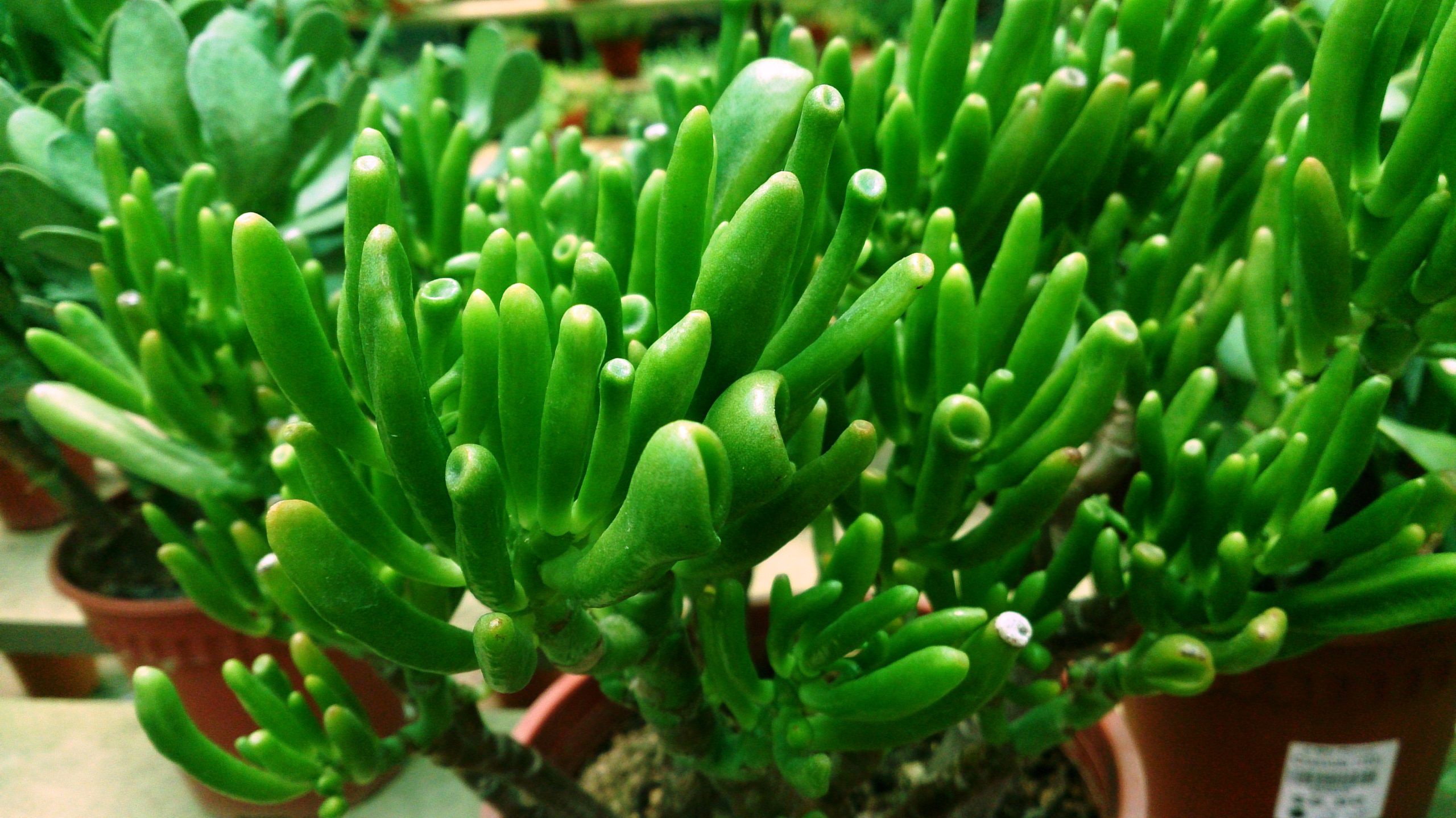
The Crassula ‘Hobbit’ is an unusual little plant that is becoming increasingly popular in succulent collections. Elsewhere, they offer the Crassula ‘Gollum’. I was immediately struck by their striking resemblance. Could they be the same plant? I found myself venturing down paths as dark and labyrinthine as the famous Caves of Moria.
One crassula to rule them all
In order to explore the ‘Hobbit’ and ‘Gollum’ dilemma, the first fundamental question is: what species do these strange creatures belong to? This is where we enter the Dead Marshes. How many men have fallen in battle trying to identify this plant? It has variously been named Crassula argentea, C. montroseana, C. portulacea or C. convulata. Ultimately, however, Crassula ovata prevailed. This final species is well known to all as it is the jade plant, beloved of novice gardeners. It is indeed this plant that has given rise to all these varieties with their misshapen leaves.
In memory of the Shire
The leaves of the Crassula ‘Hobbit’ and ‘Gollum’ varieties resemble small trumpets. The tip of each leaf is concave. This distinctive shape is reminiscent of hobbit holes, which is how the first Crassula of this type came to be named in the 1980s. Thus, the Crassula ‘Hobbit’ was born! The following year, a second Crassula with folded leaves and a depression appeared under the name ‘Gollum’.
The problem is that, over time, the names have become interchangeable. The most plausible hypothesis to explain this appearance is that the leaf malformation is caused by a bacterium. This results in significant variations in the leaves, as well as instability. In other words, it’s not uncommon to see a ‘Gollum’ revert to a traditional jade tree. This is why the confusion persists and grows.
In honor of the true Lord of the Rings
About ten years ago, in a desire to bring order and calm back to Middle-earth, Roy Mottram, a great enthusiast of the Crassulaceae family, proposed grouping all these mutants under one name: the Tolkien group.
He argued that none of these variations had been properly recorded or described, which is true. None of these names are official!
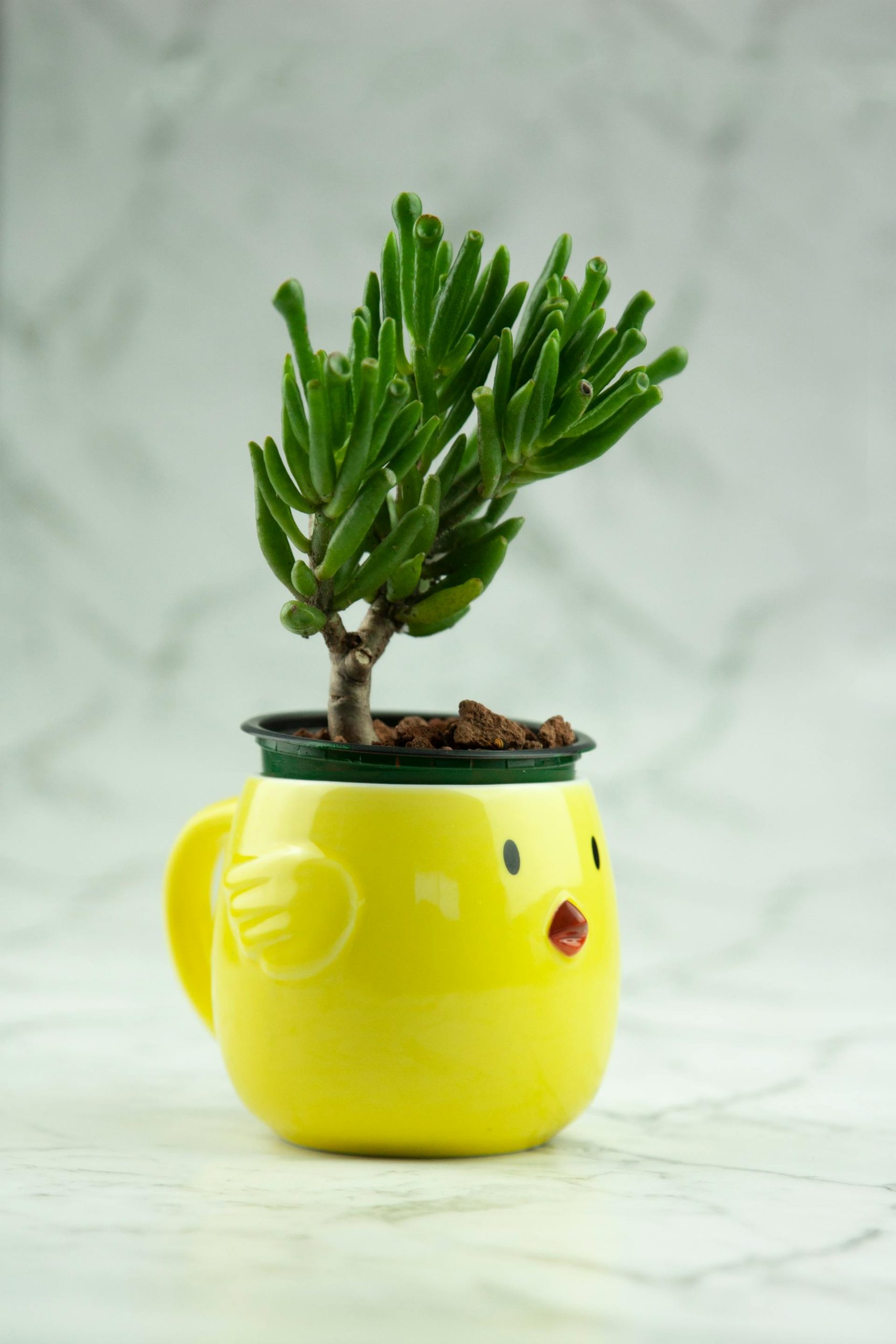
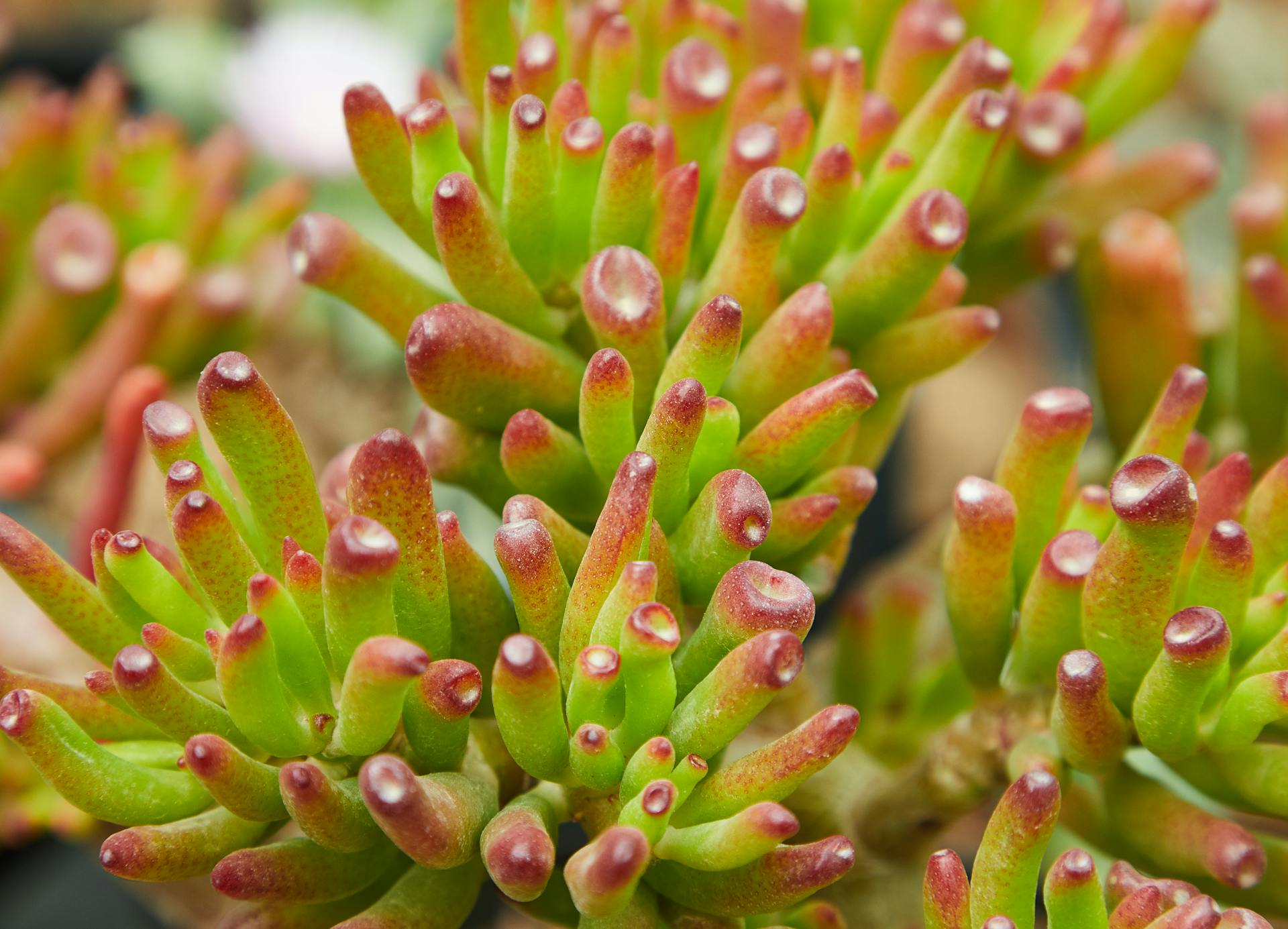
Over the years, the different varieties have begun to be renamed. For instance, if the leaves are thin and elongated like straws, the plant is called ‘Ladyfingers’ or ‘Skinny Fingers’. If the leaf tips are tinged red, the plant is called ‘Red Hobbit’ or ‘Red Coral’. Some have even attempted to distinguish ‘Hobbit’ from ‘Gollum’, arguing that ‘Gollum’ has broader leaves.
Ultimately, it’s simpler to say that they are all part of the Tolkien Group.
Interestingly, one of the leading botanists and revisionists of the Crassulaceae family (the Crassula family) is the Australian Hellmut R. Tölken (also spelled Toelken). Despite the strong similarity in names, Hellmut is in no way related to the famous author of The Lord of the Rings, J. R. R. Tolkien. But it’s still a fun fact!
No… not Shrek
It’s not uncommon to see the Tolkien Group crassulas (oh… I’m starting to get used to that name) being sold as Shrek ears. Even though the resemblance is striking, it’s still an unrecognized name. So, because I much prefer the Fellowship of the Ring to the green ogre, I propose we stick with the Tolkien Group!
If the leaf mutation might be caused by a bacterium and the plants can revert back to a normal jade form, has there been any scientific Block Blast research or lab testing to confirm the real cause of this mutation?