
Last week, we saw that transplant shock is a trial our tomatoes, peppers, and eggplants go through with some grumbling, but from which they generally recover well. For these plants, transplanting is a necessary step—we don’t really have a choice given Quebec’s short growing season—and it usually goes pretty smoothly.
But there are plants for which the problem is of an entirely different nature. It’s not that they suffer a bit before recovering. It’s that their very biology makes transplanting pointless, even disastrous. And if you’ve ever harvested carrots that looked more like a tangle of tentacles than vegetables, you’ll finally understand why!
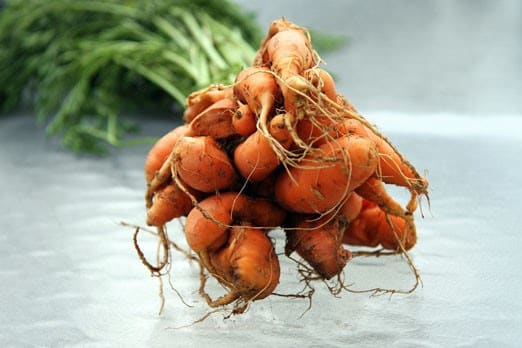
The carrot is the root
The carrot is what’s known as a taproot plant. This botanical term refers to a root system organized around a single main root that grows vertically into the soil, with small lateral secondary roots branching off from it. This often gives them a very deep and sturdy root system. Try pulling up a dandelion without breaking that root, and you’ll immediately understand what I mean. Fortunately, the carrot has been well-adapted and selected for harvesting, and the lateral roots are all delicate.
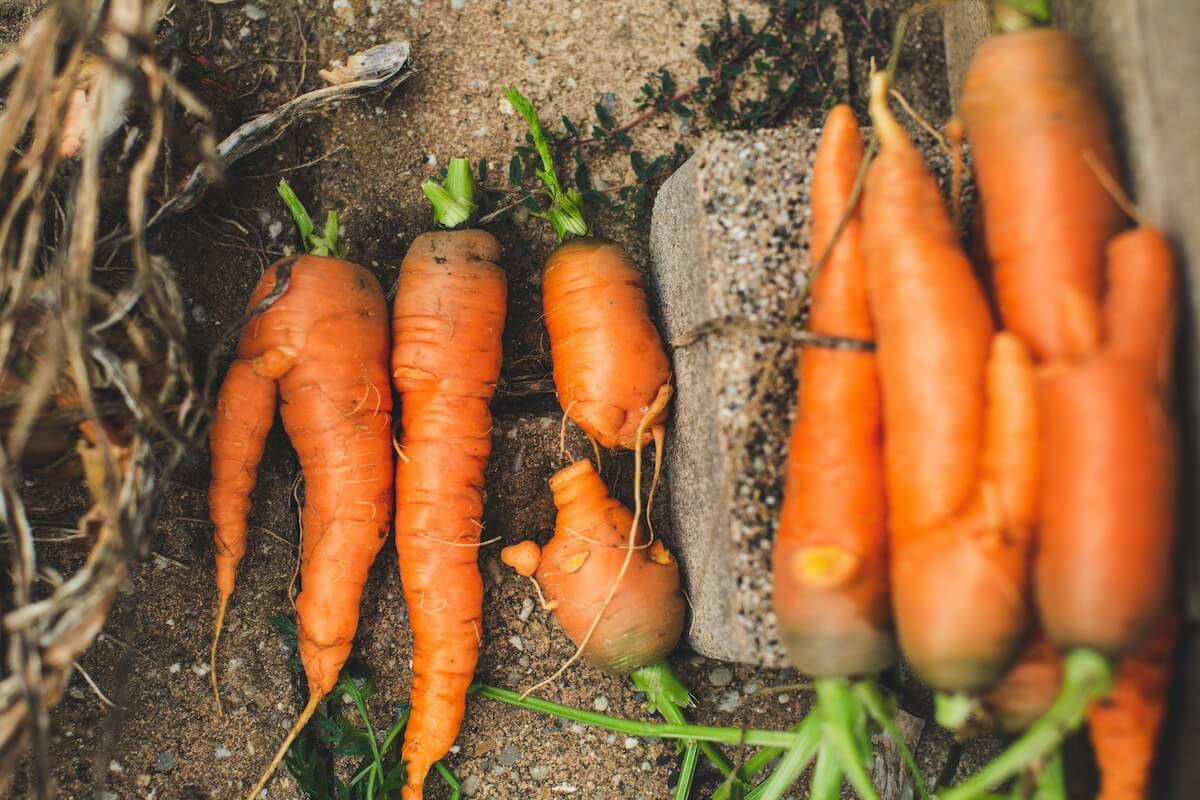
In carrots, this taproot thickens to become the orange, tasty part we eat. The carrot is the taproot. Here’s the problem: if you disturb this root during transplanting—even the slightest disturbance—it no longer thickens properly. It forks, it twists, it produces branches in every direction. The plant survives just fine, it grows its foliage, it looks perfectly healthy—but underground, it’s chaos. You’ll harvest a nice bunch of orange filaments instead of a carrot.
This is why carrots don’t like stony or compacted soil: every obstacle the root encounters causes a deformation. The soil must be loose, light, and ideally at least 45 cm (18 in) deep for long varieties. Sow directly in the ground as early as possible in the spring—as soon as the soil reaches about 10°C (50°F), which is usually in May in Canada—and leave it alone.
The same goes for other root vegetables like radishes or parsnips. The principle is the same. You sow in place, thin them out, and let nature take its course. (Since radishes grow so quickly, there’s no real reason to start them indoors anyway.)
Rolling up nature?
I’ve noticed a new trend: snail-style planting. There are tons of videos on YouTube showing the technique, and I’ve even seen some claiming it works for carrots! By unrolling the strip of soil and planting it directly into a trench in the garden, without disturbing the plants: no problem!
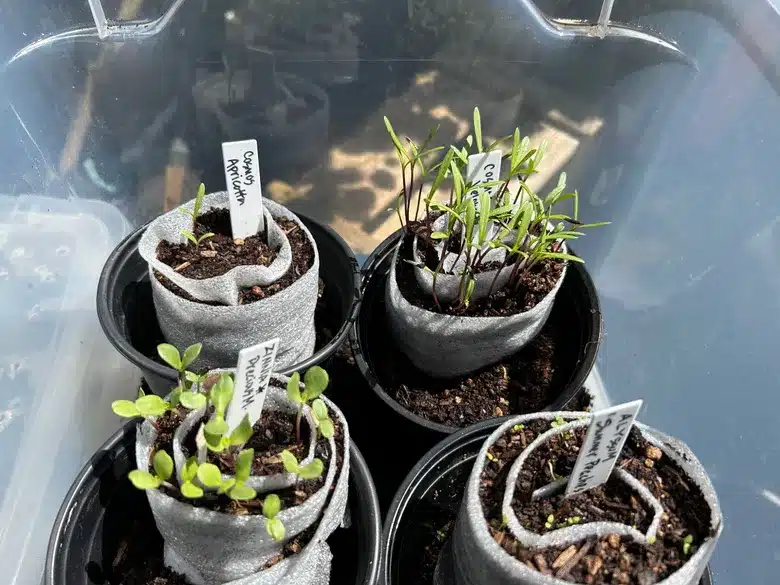
Well, honestly, I’ve never tried it and I can’t say it doesn’t work, but I still have serious doubts. The roots are exposed during the process and disrupted by the change in environment, soil, angle, and so on.
What’s convenient about these videos is that they show us how to plant the seeds, but never really show the harvest results! I tried to find reviews from people who don’t sell “snail seed kits,” and a stranger summed up his experience in a Facebook post with these terse words: “It’s crap.” That really made me laugh!
Let me know in the comments if you’ve ever tried it—I want to know! Especially about the roots!
Cilantro and its relatives: stress as a trigger
Cilantro belongs to the Apiaceae family—the same family as carrots. So it also has a taproot, but since we don’t want the root, that’s fine! What makes it a particularly poor candidate for transplanting is something completely different: it bolts as soon as it’s stressed.
Cilantro is a cool-season plant. Its survival mechanism is to produce seeds quickly before conditions become too hostile—too hot, days too long, or… too much stress. Transplanting is precisely that kind of stress. The plant, disturbed, interprets this as an alarm signal: “Conditions are deteriorating; we must reproduce now.” And just like that, instead of giving you those lovely aromatic leaves you were waiting for to make your guacamole, it bolts and goes to seed in a matter of days. The plant has done its biological job correctly—it’s just that it wasn’t what you wanted.
My cilantro, which had barely sprouted in my grow room, has already paid the price: I raised the temperature a bit to help my peppers germinate… It looked like it was drying out and dying, then perked up a little and now seems to be heading to seed! I won’t even have had a single nice leaf to eat…
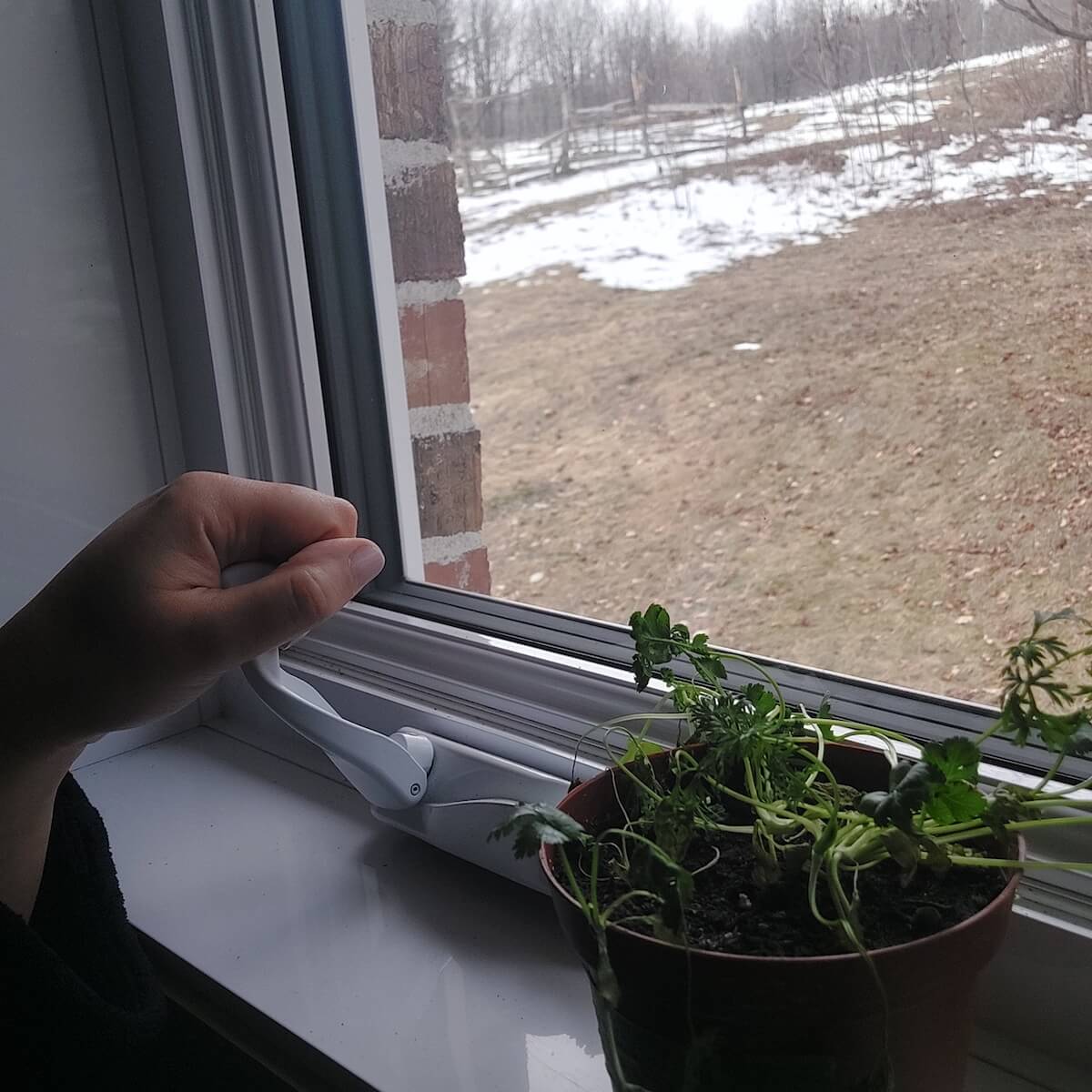
I haven’t put my window screens up yet, and I’m REALLY struggling not to open the window and throw it out into the snow. You want cold, sweetie? You’re gonna get it! (I’m writing this post in late March, when it’s -12°C (10°F). The joke might not land as well in two weeks… let’s hope so, anyway!)
Other herbs
The same principle applies to dill and fennel, which share this biology of being tap-rooted plants that are sensitive to stress. These three herbs are sown directly where they will grow, in succession every two or three weeks to ensure a continuous harvest throughout the summer.
Parsley, another cousin in the same family, is a slightly different case: it tolerates transplanting better if done very early, when the root is still tiny. But as a general rule, direct seeding works best for it, too.
Beans: a lesson I learned the hard way
I have a small corner of my balcony where I grow climbing beans every summer—they make a beautiful green curtain and provide some much-appreciated shade in July. One year, I had the brilliant idea of starting them indoors to get a head start. I germinated my seeds and carefully transplanted them outside two weeks later. Plan B, just in case: I sowed a few seeds directly into the planter at the same time.
The result? My precious transplants took a complete break. They stopped growing, as if they’d decided to take a vacation. Meanwhile, my direct-sown seeds—planted two weeks later—caught up to them, then surpassed them, as if nothing had happened. That’s how fast climbing beans grow! In the end, there was no difference between the two groups. Two weeks of extra work, two weeks of space taken up on my seedling shelf, for exactly the same result as those planted directly outside two weeks later!
A little bonus anecdote from the year before: sprouted beans develop large white roots that are quite visible if you don’t bury them deep enough. A bird, convinced it had spotted a feast of worms, dutifully pulled up a few freshly sown seeds. From its perspective, it made perfect sense—especially since, upon realizing its mistake, it left my sprouted beans on the side of the box. I took that as a “sorry, ma’am”—impossible to be mad at the bird! I replanted those barely sprouted beans, but they fell way behind the other plants.
Moral of the story: bury your seeds properly!
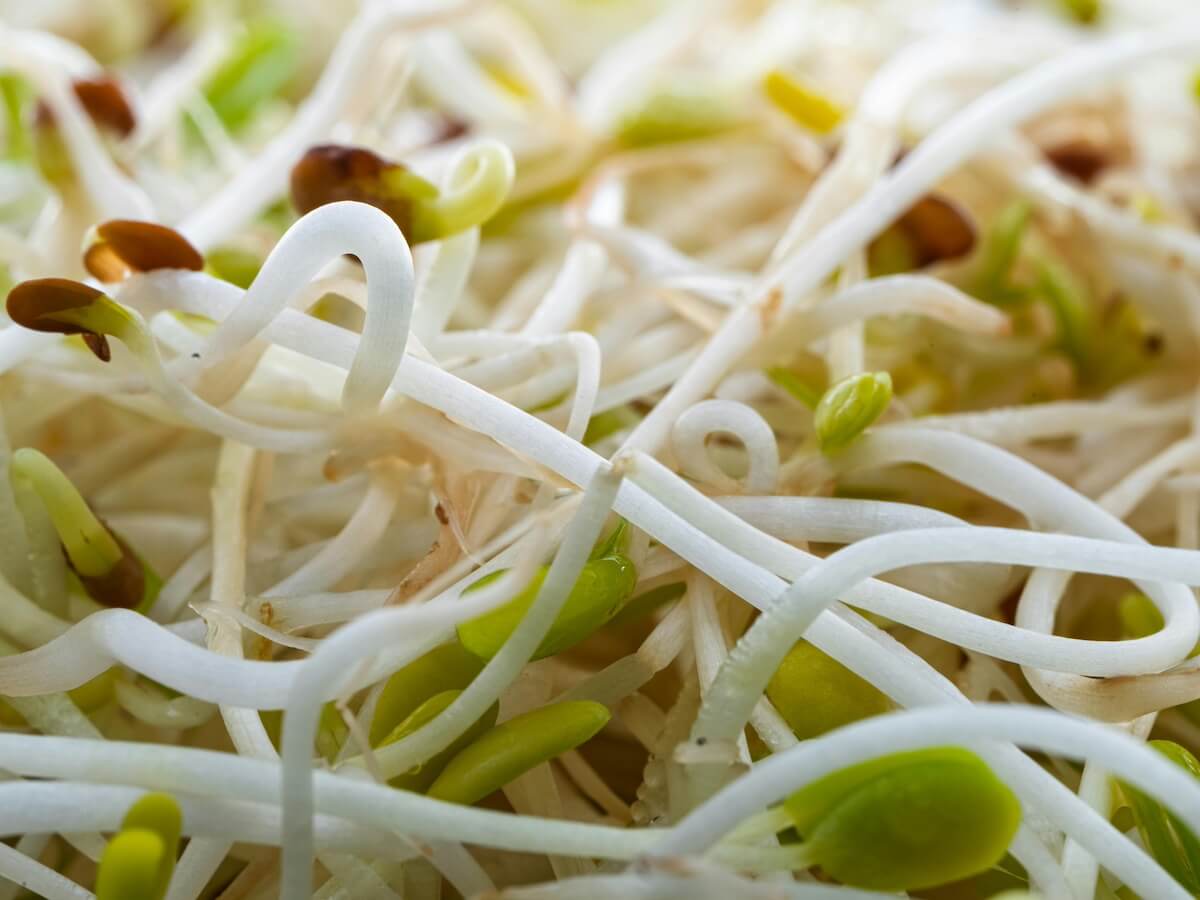
(You’ll never look at sprouted beans the same way again!)
Squash: the tightrope walker’s transplanting
Squashes and zucchini have a reputation for being difficult to transplant, and that reputation is well-deserved.
Unlike tomatoes—a diva that can grow new roots all along its stem if buried deeply—cucurbits lack this ability. Their lateral roots are extremely fragile, and most importantly, they do not regenerate if broken. A tomato whose roots are damaged during transplanting will simply grow new ones. A squash whose root ball is broken is a squash that dies. Period.
It’s not that you can’t transplant squash—growers and gardeners do it to gain a few weeks in our short growing season. It’s just that you’re working with virtually zero margin for error: a perfectly intact root ball, minimal handling, early transplanting (no more than two or three true leaves—after that it gets risky), and individual pots are mandatory from the start. The slightest root damage and the plant won’t recover. It isn’t being picky; it’s just a truly ultra-fragile porcelain doll.
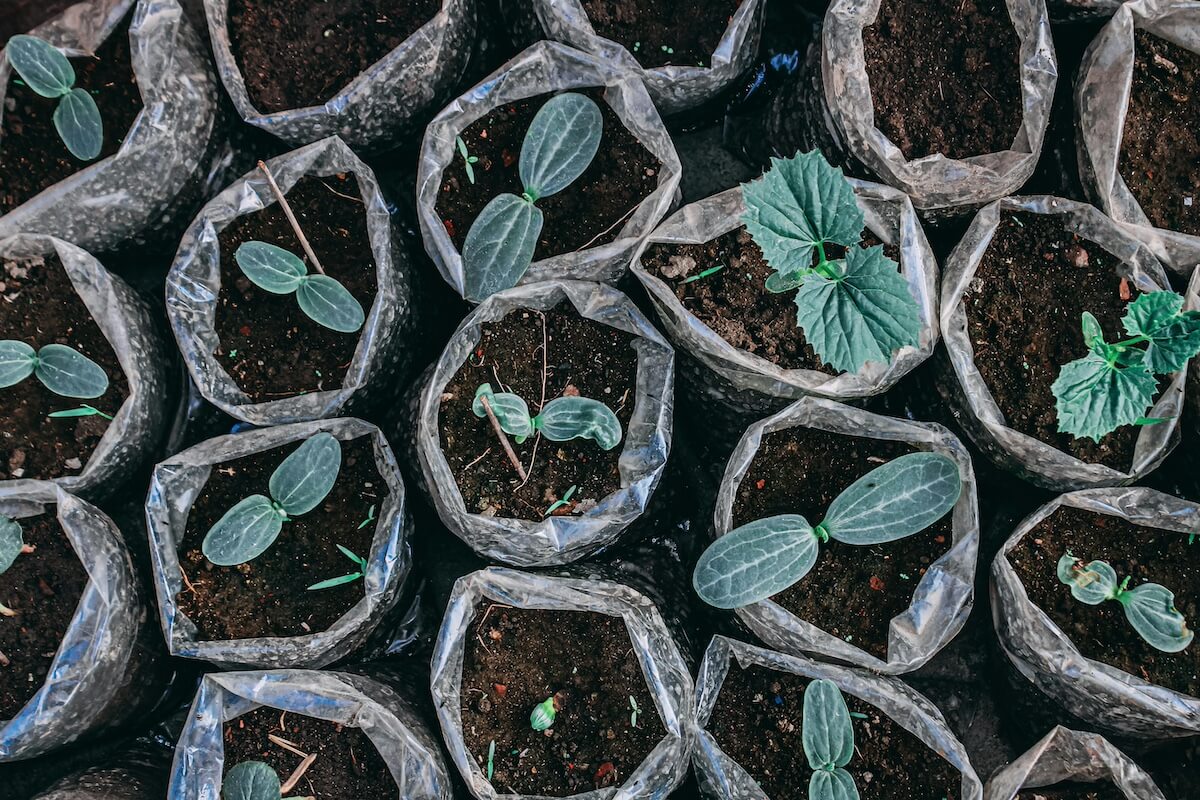
So if you’re really craving zucchini, try growing them in peat pots that you can plant directly into the ground. Worst-case scenario, you’ll miss the mark, but it won’t be too late to sow them directly outdoors. For winter squash, since we’re not talking about a matter of a couple of weeks and we harvest in the fall, we can avoid that stress. As for melons… Well, I’ve already decided that’s not for me!
The guiding principle: understand before you sow
For some plants, the problem isn’t about transplanting technique. You could have the gentlest hands in the world, the most sophisticated equipment, and the most eco-friendly biodegradable pots: the carrot will still grow a misshapen root, the cilantro will still bolt, and the beans will still catch up—taking just as long as if you’d sown them directly. The biology of these plants simply isn’t designed for transplanting.
Understanding these distinctions not only saves you time and space on your seedling shelf but also spares you a lot of disappointment. For these plants, direct seeding in the ground isn’t a shortcut for the lazy—it’s just the right solution!
Want to conquer a new geometry vibes high score milestone? Discover these 5 amazing tips to help you master the rhythm and easily pass Level 10!
I’ve successfully used seed snails for flowers, and I currently have marigolds, zinnias, and nasturtiums all doing quite well. From my experience over the past couple of years, the roots develop much better, snails take up much less space, are less fussy, and they have transplanted successfully. I’ve never tried vegetables or herbs.
Great article Audrey. Doesn’t matter how often you tell people to seed root crops directly people still try to grown them as seedlings. The snail method of planting seems to be all the rage at the moment. Another fad that will probably show it doesn’t work as well as it states. Seeds want to grow but then we have to give them what they want too.