
I’ve had a florist’s azalea for several years. It spends its summers outdoors and its winters in a cool room.
I noticed that a friend places wilted flowers on the soil in her pot, all around her azalea. She says this returns nutrients to the plant. I’ve started doing the same thing, but I wonder if there’s enough microbial activity in the potting soil of a houseplant to make these nutrients available to the plant.

It’s a good practice in the garden, but is it also a good idea for a potted plant? It does create a nice, thick layer of mulch, since my azalea is blooming profusely.
Can you shed some light on this for me?
Answer
My houseplants also spend the summer outdoors, partly because I don’t get much sunlight indoors when the trees come into leaf, but also because it means I have to tend to them even less… at least if it rains from time to time.
Tree leaves often fall into my pots, and I leave them there. Do the leaves decompose? No. They often stay dry on the surface of the soil until I decide to pick them up. Would they eventually decompose? Probably, but how long would that take?
The sterility of potting soil
So what exactly goes into potting mix for houseplants? It’s usually made up largely of sphagnum peat moss, in various grades, but may also contain coconut fiber, wood fiber, perlite, vermiculite, and other additives to stabilize the pH or improve water retention. But the main ingredient remains peat moss.
Peat moss decomposes very slowly due to phenolic compounds that inhibit bacterial activity. This is one of the reasons it is used as a growing medium in horticulture: it decomposes slowly, so it doesn’t need to be replaced constantly. If it decomposed quickly, it would break down into small pieces that would compact, which would hinder the drainage and aeration necessary for the roots.
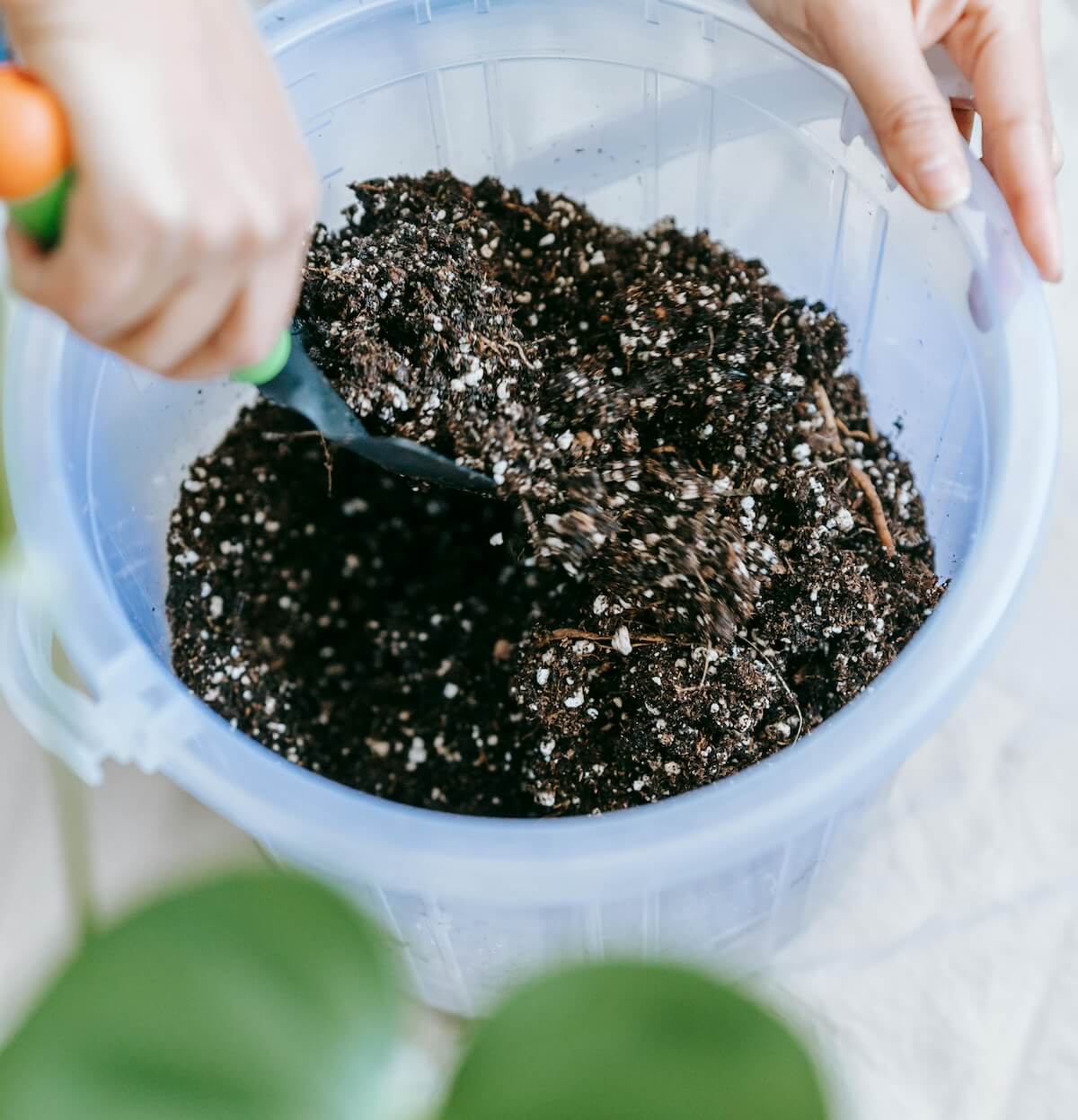
During the bagging process, potting mixes are often heat-sterilized, which also eliminates most of the bacteria that could break down organic matter. The microorganisms that remain come from our indoor environment, which is relatively poor in microbial life. The potting mix will therefore become colonized over time, but not necessarily by the organisms most effective at breaking down this material.
Less-than-ideal conditions for microbial life
Conditions in our homes are already unfavorable for microbial life: the air is often dry, there is no contact with natural soil, and the diversity of microorganisms is much lower than outdoors. In a pot, this effect is even more pronounced.
The dry surface conditions—which we maintain intentionally to prevent root asphyxiation or rot—also make the environment unfavorable for microorganisms that would decompose the flowers. They will eventually decompose, but over the course of several years.
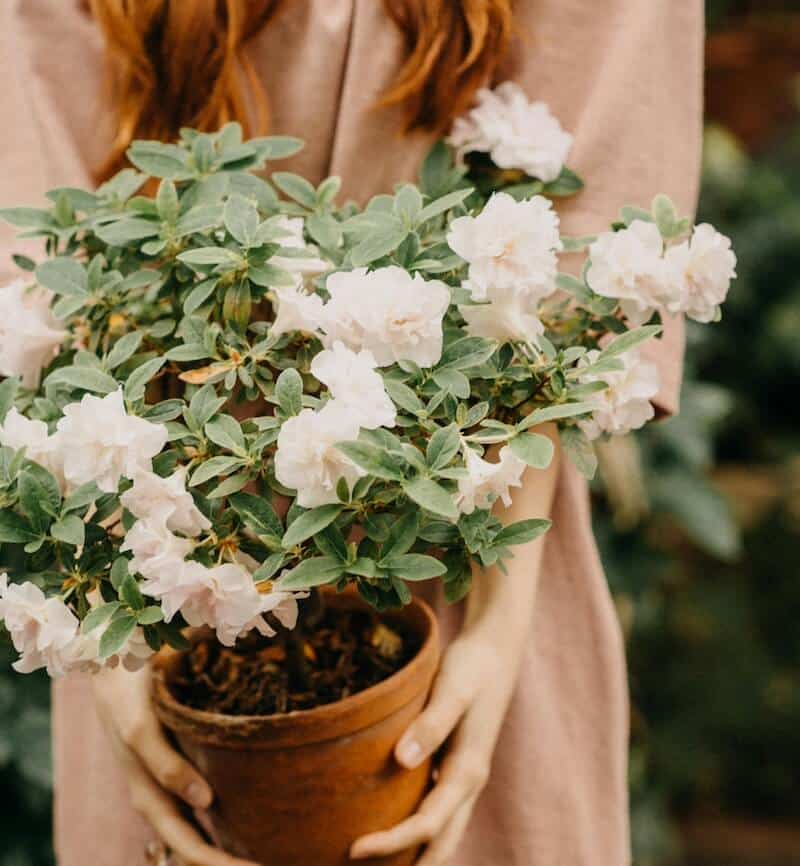
It’s also worth noting the absence of insects and soil organisms, such as earthworms, which normally speed up decomposition in open ground. In a pot, they are absent, with a few rare exceptions.
It is possible that the flowers will eventually dry out and break down into small pieces that will mix with the potting soil. You won’t see them anymore, but they will still be there, without really nourishing the plant, although a small portion of the minerals they contain may be released into the water when you water the plant.
The “vacation” factor
There is another factor to consider: when you take your pots outside, the potting mix undergoes a veritable “infusion” of life. Wind and rainwater deposit spores of decomposing fungi and bacteria that quickly colonize the surface. Tiny workers like springtails or predatory mites settle into the moisture beneath wilted flowers. They are the ones who actually begin the breakdown process that sterile indoor potting mix cannot accomplish on its own.
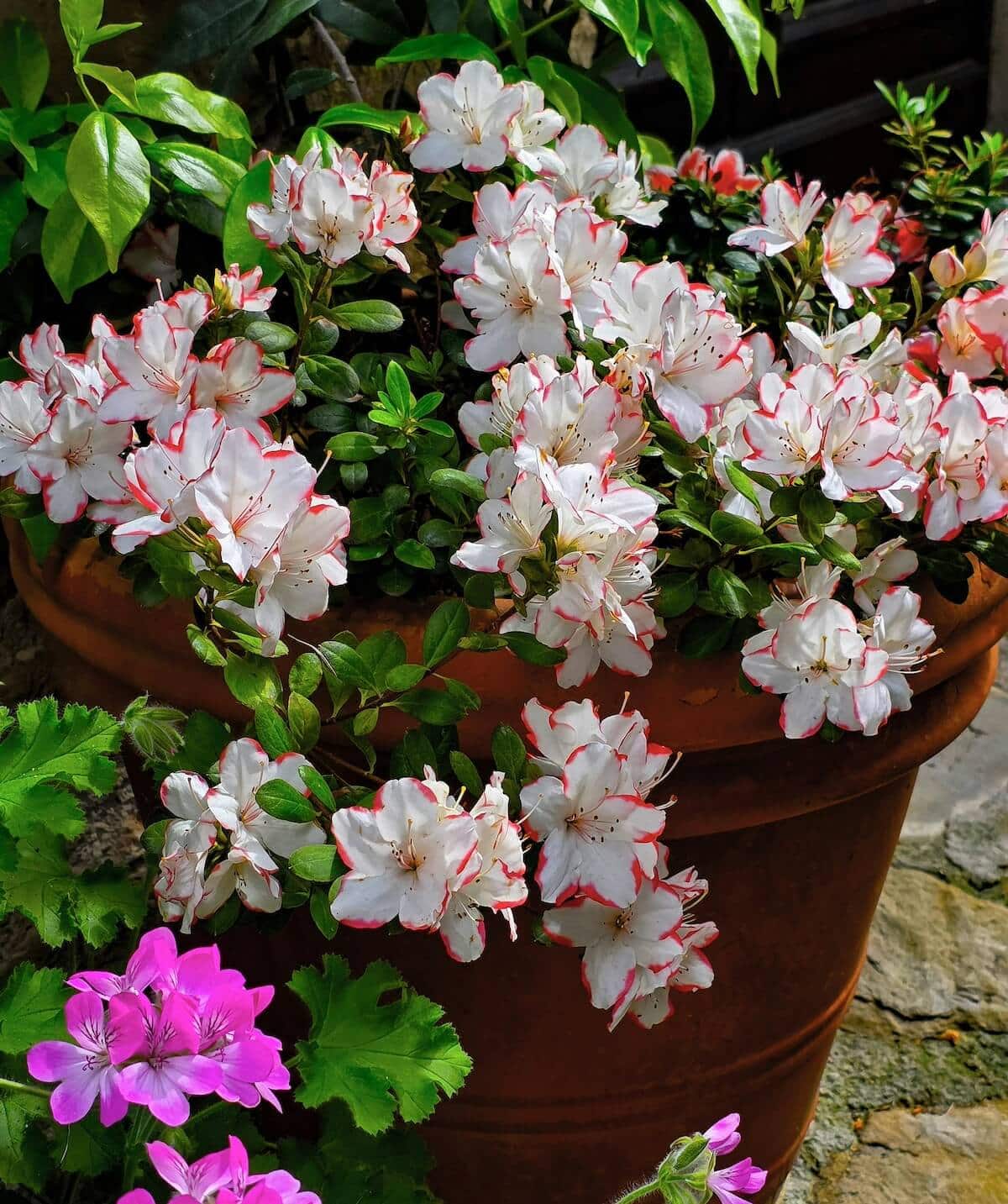
In fact, this is the only time your friend is partially right: during the summer, the higher temperature speeds up the microbes’ metabolism. This biological activity then becomes sufficient for some of the nitrogen in the flowers to be actually released and contribute (a little) to the plant’s nutrition.
However, this cycle is short-lived. Upon returning indoors, the shock is sudden: the dry air from the heating and the drop in light cause a massive decline in these microorganism populations. While the overall biological diversity of the substrate increases over time, it nevertheless goes dormant during the winter. The decomposition process then stops almost entirely as soon as the plant returns to its cool room.
Is mulch like that formed by flowers beneficial?
The rate of mineralization—the conversion of organic matter into nutrients that plants can absorb—is too slow to meet your plant’s nutritional needs. You’ll therefore need to continue fertilizing as usual.
Is there any benefit to this? Perhaps a slight effect on surface moisture. But it can also keep the surface too wet. If you notice gnats or mold, it’s a sign that the potting mix isn’t drying out quickly enough.
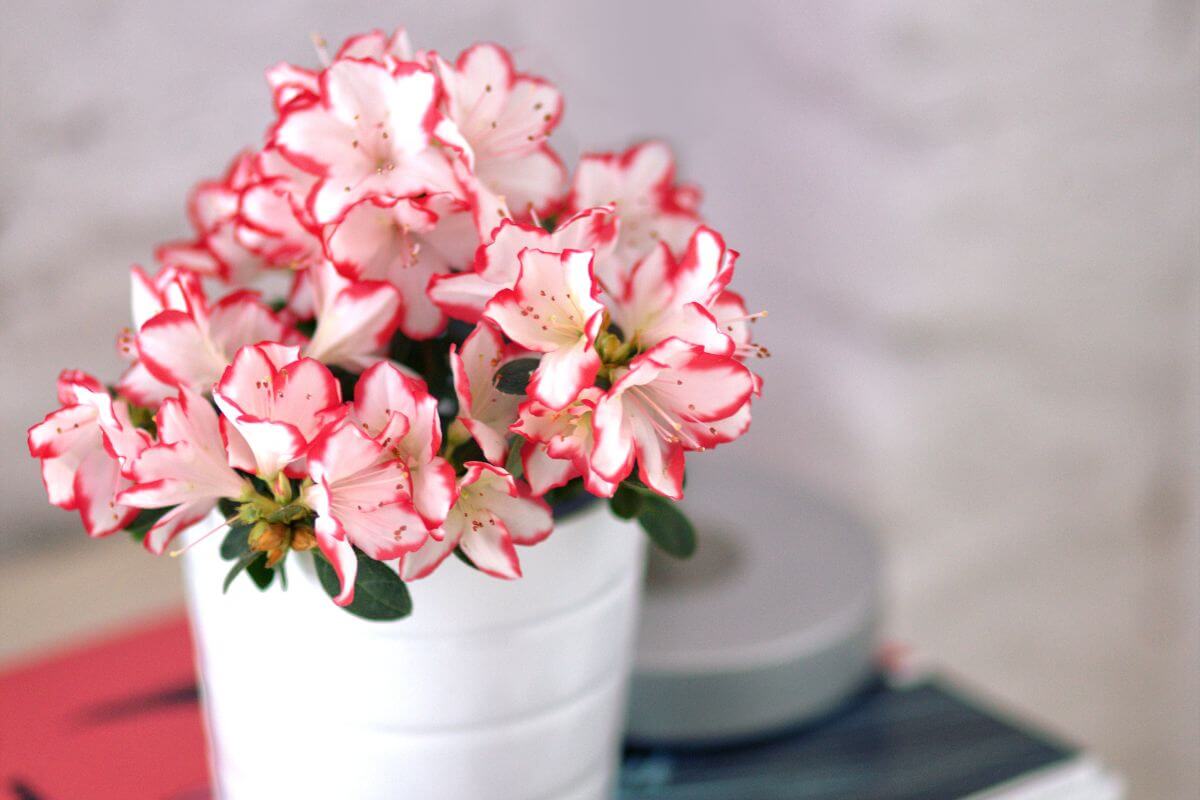
Personally, I don’t see this as a real advantage—other than the fact that it’s one less thing to do—but I don’t see it as a disadvantage either in most cases. You can probably leave the flowers on top of the potting mix, while keeping a close eye on them, but this mulch won’t nourish your azalea the way it would outdoors in a garden.
For those who prefer a challenge, fnaf 2 is both horrifying and very addicting due to its blend of strategy and fast reflexes.
Even in 2026, geometry dash world continues to attract players who enjoy skill-based arcade games. The latest improvements enhanced stability, customization features, and overall gameplay quality. Players must complete obstacle-filled levels using perfect timing and fast reactions. Its addictive rhythm gameplay and creative level design make it stand out from other platform games.
Learning blends seamlessly with fun when cool math drives the gameplay. You won’t even notice how much you’re improving.
A thoughtful question and useful answer: Thanks you two!
Thank you for the helpful information.