
When you enjoy exploring natural areas throughout southern Quebec, it’s only a matter of time before you stumble upon a beautiful patch of poison ivy! And this week, well… I got poison ivy!
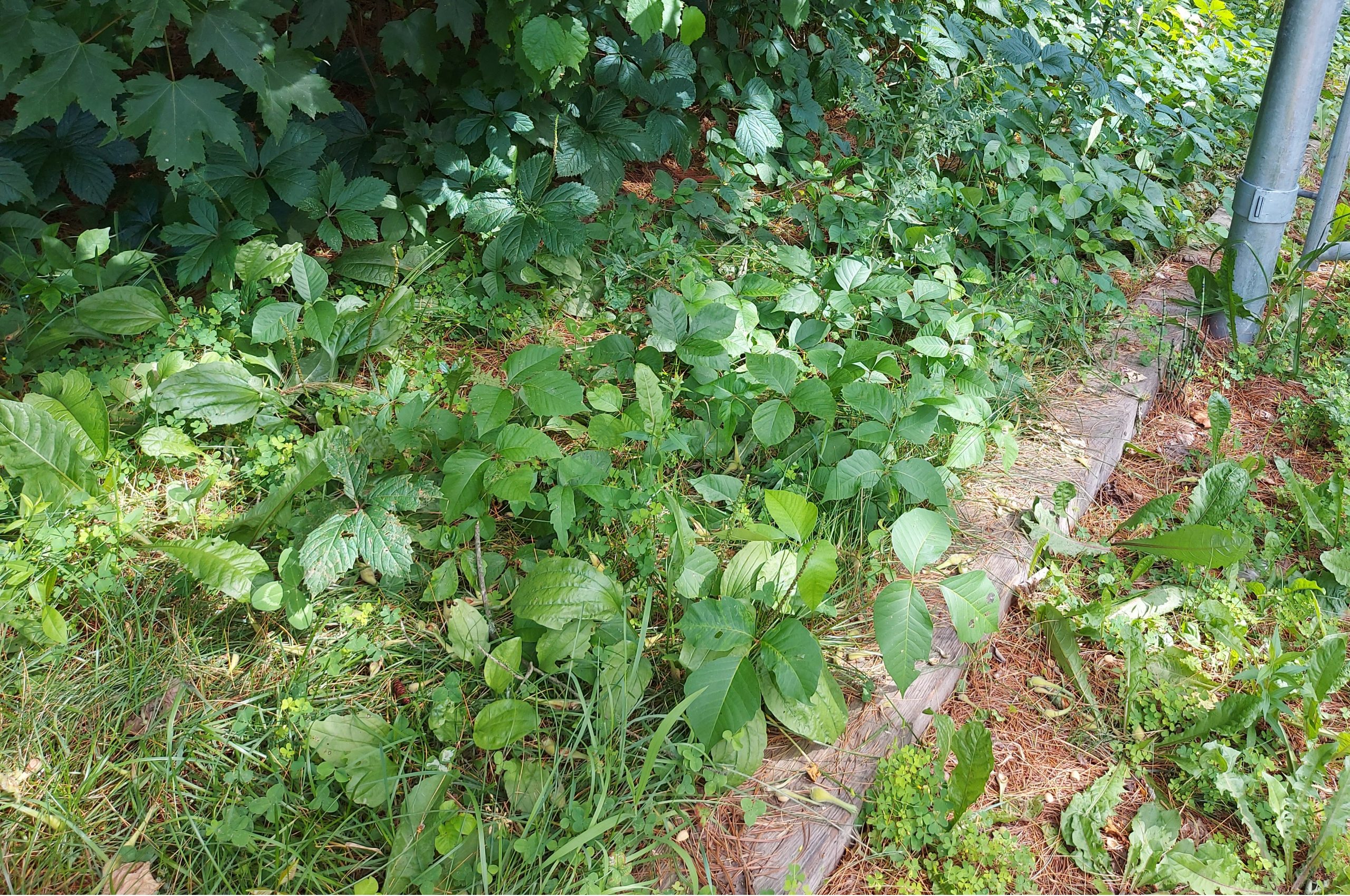
Yet, I recognize the plant easily. I know the habitats where I’m likely to encounter it. I’m also well aware that some strains are more virulent than others: it’s said that poison ivy in western Quebec (particularly in the Outaouais region) causes more severe reactions than in the central part of the province. Despite all this, whether gazing up at the sky, searching for a warbler, or lost in my daydreams as a forest dweller, I suddenly realize… I’m standing right in the middle of the patch! I take every possible precaution to avoid direct contact between the sap and my skin. Then, I tie my shoelace and… I scratch my back! Damn!
That’s what inspired this little quiz! Unfortunately, I don’t have a solution to offer for your absent-minded moments. However, I can help you identify that naughty little devil you need to watch out for!
Recognizing poison ivy
Poison ivy exists in two forms. The first, less common in Quebec, is a climbing plant that clings to tree trunks. The second spreads across the ground, forming large colonies. In both cases, each leaf has three leaflets. I won’t say any more for now; it’s your turn to test your knowledge.
So, can you identify poison ivy?
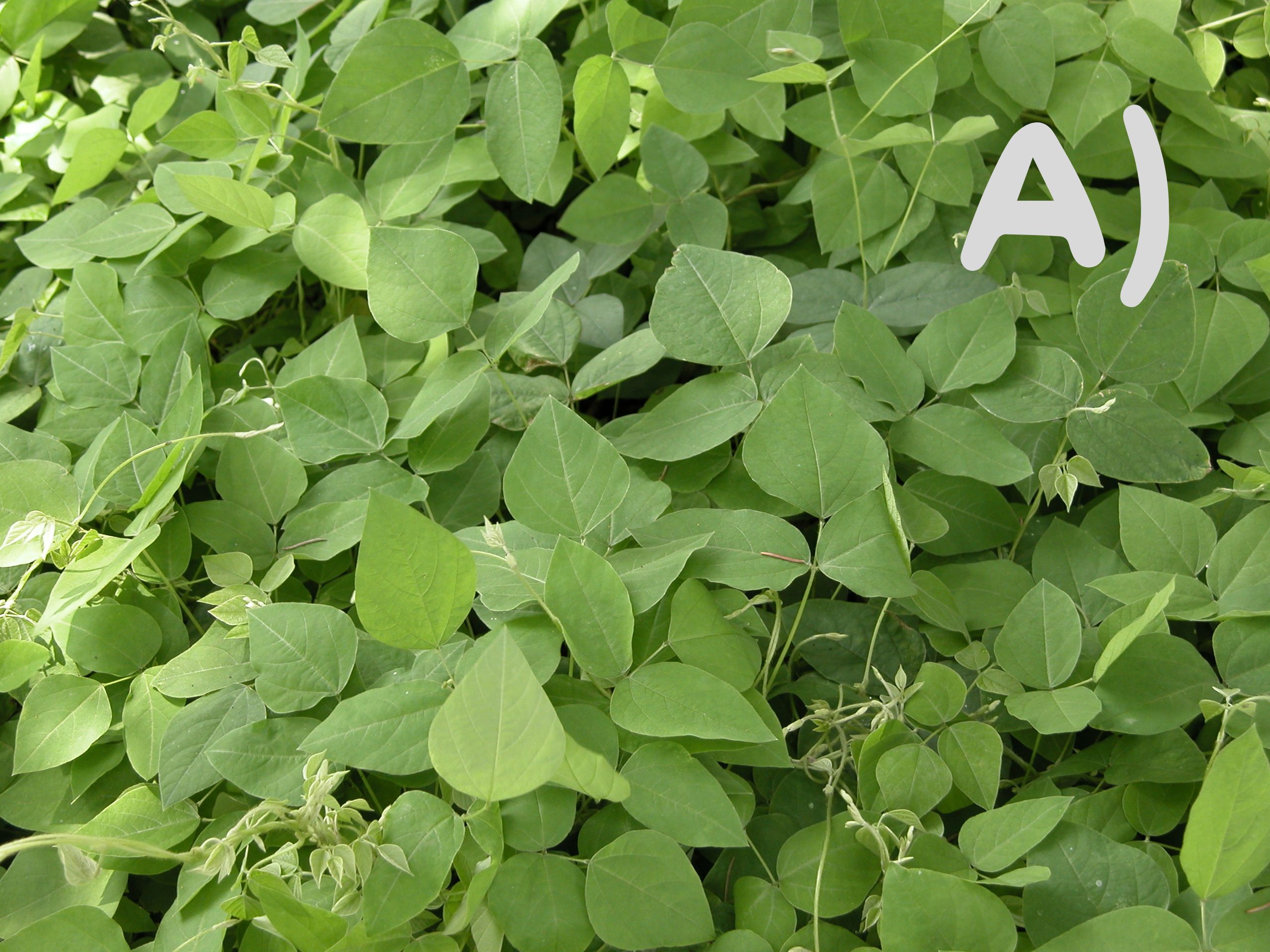
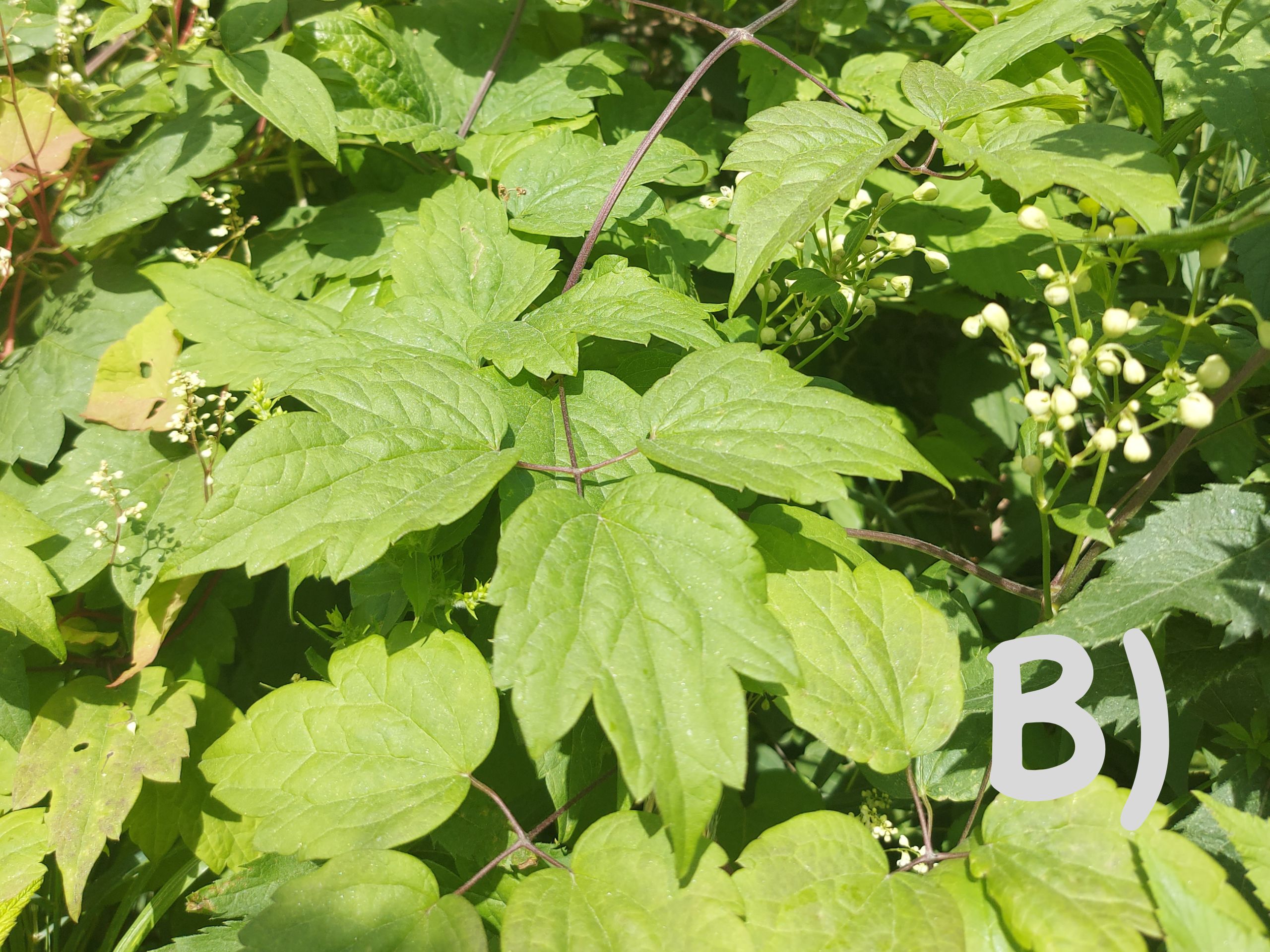
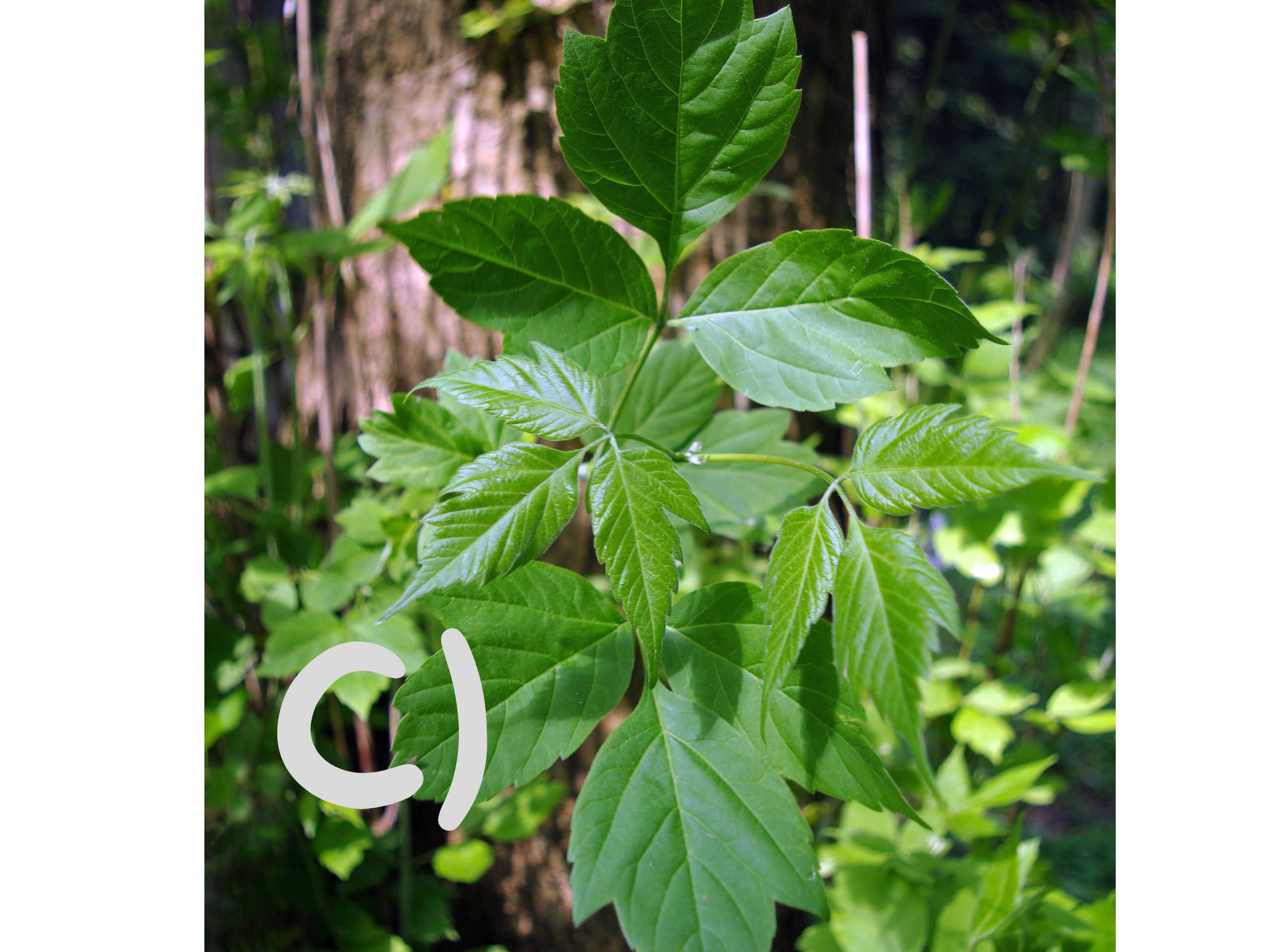
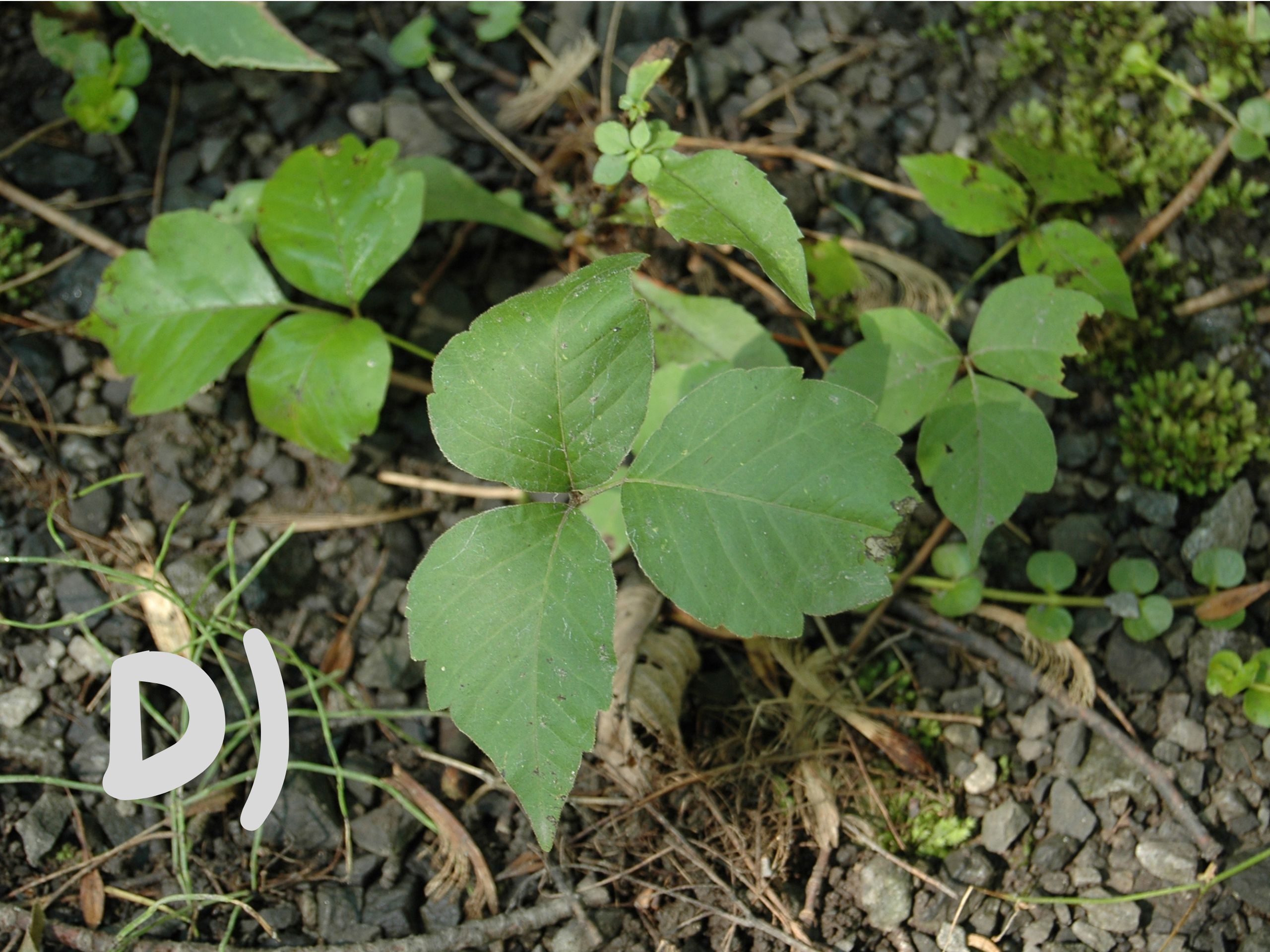
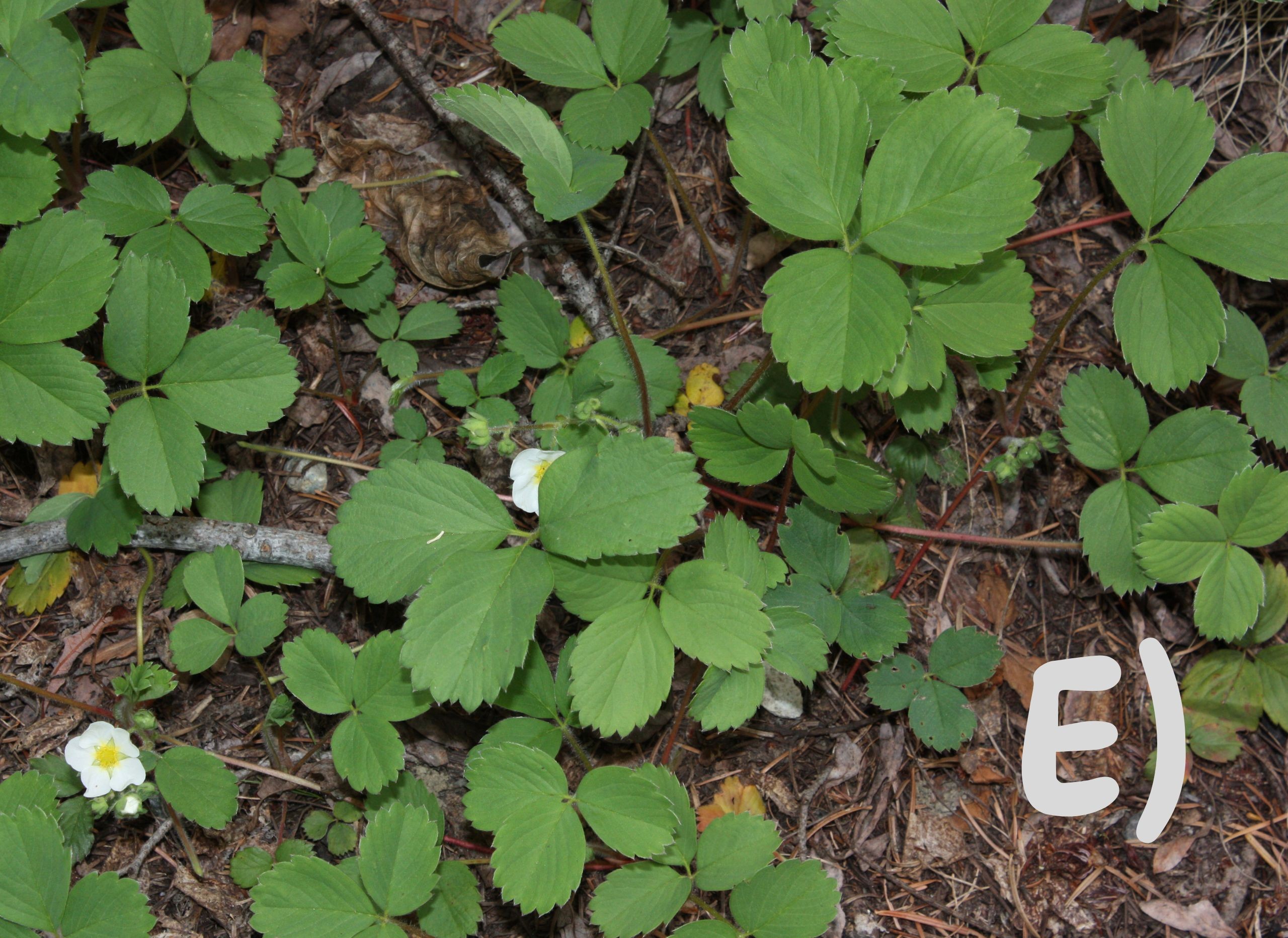
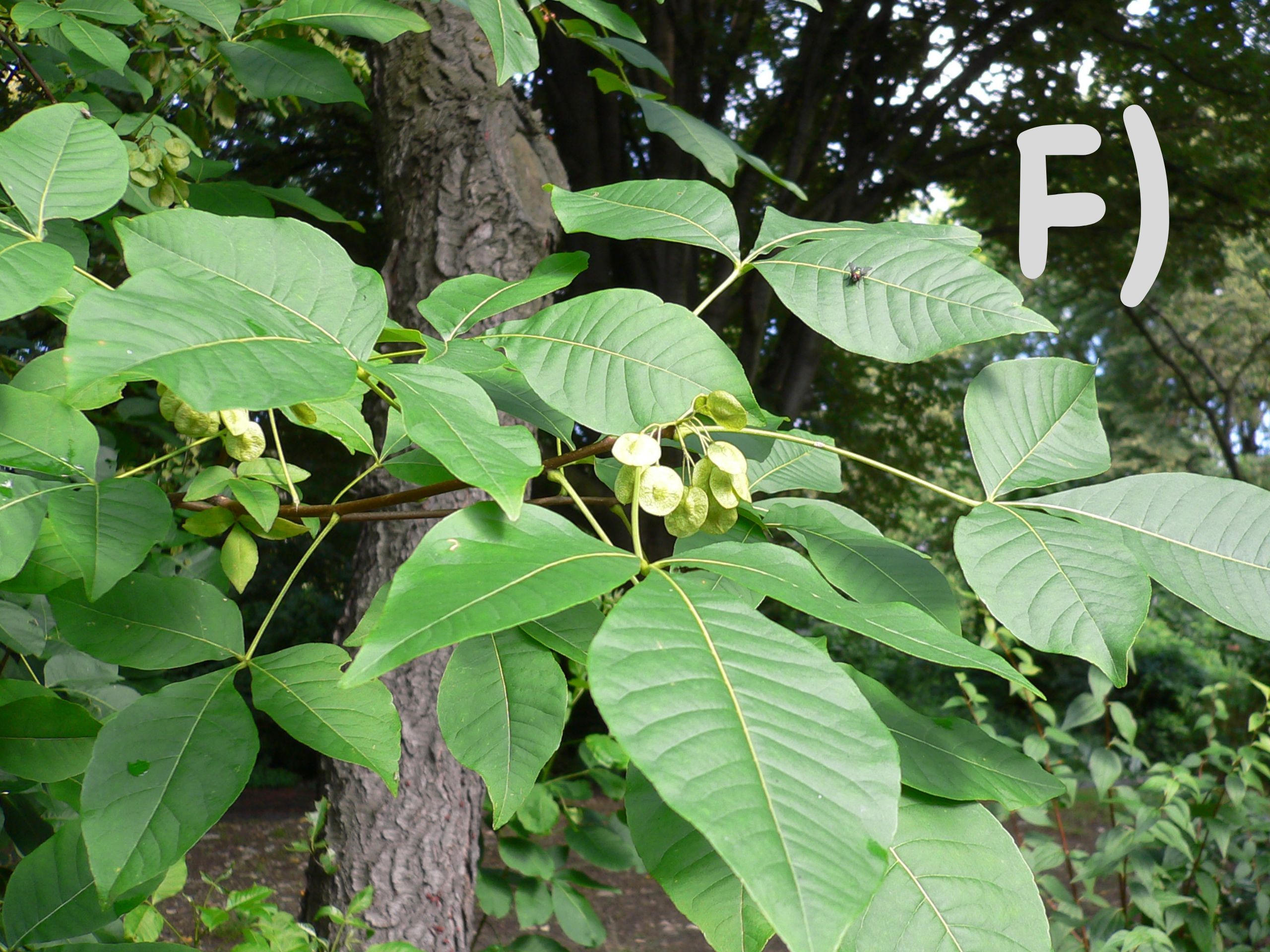
And the answer is… D!
These plants all have in common that they can produce leaves with three leaflets. Experts will have recognized the American hog peanut (Amphicarpaea bracteata) (A), Virginia clematis (Clematis virginiana) (B), Manitoba maple (Acer negundo) (C), poison ivy (Toxicodendron sp.) (D), Virginia strawberry (Fragaria virginiana) (E) and the three-leaved hop-tree (Ptelea trifoliata) (F).
To easily identify poison ivy, there are a few tricks. First, the petiole of the central leaflet is longer than those of the other two leaflets. But this criterion also applies to many trifoliate leaves! Second, when fully unfurled, the leaf is often glossy, but this isn’t always the case. In spring, when the young leaves unfurl, they take on a reddish hue and the leaflets point downwards. And my favourite criterion, the one I truly rely on, is the variability of the leaves! In the same clump, you’ll find leaves with smooth margins (no teeth), some leaves with a single tooth, others with several teeth. It’s never the same from one leaf to the next. The teeth are very often coarse and irregular.
This criterion eliminates several three-leafed leaves, and at this stage, only the young leaves of the Manitoba Maple (Acer negundo) can still qualify. However, Manitoba maple leaves are opposite along the stem (one facing the other), while poison ivy leaves are alternate.
Two species of poison ivy? No. Maybe three?
It was also this summer that I was struck by a shocking revelation: there are apparently two species of creeping poison ivy! I had already seen the climbing poison ivy (which is classified under T. radicans), and I knew of the existence of poison sumac (T. vernix). So, in my budding botanist’s heart, everything low-growing and ground-covering also belonged to T. radicans. But now some are proposing the addition of a new species, T. rydbergii.
As for poison sumac(T. vernix), the matter is easily resolved. Its presence is concentrated in southwestern Quebec, particularly near Saint-Zotique, Dundee, and Brossard. Poison sumac forms a large shrub with compound leaves composed of 7 to 11 leaflets. It could easily be mistaken for a young ash tree. This species also causes dermatitis, so caution is advised.
Regarding the potential existence of two distinct species of “creeping” poison ivy, I’ve once again opened a can of worms and mysteries! It’s all contradictions! According to Wikipedia, T. rydbergii is found only in western Canada, while T. radicans is found onlyin the east. Thus, both the climbing and shrubby forms would be grouped under T. radicans. However, the Go Botany identification key states that T. rydbergii spreads via rhizomes (forming low, dense colonies), while T. radicans has aerial roots and is the climbing form, but it can also creep (if the plant doesn’t find support!). For its part, the Canadian Vascular Plant Database (VASCAN) subdivides the genus T. radicans into two varieties (T. radicans var. radicans and T. radicans var. rybdergii).
Let’s just say the desire isn’t there to feel the leaves or kneel down to take photos in a colony to discover which species it is… because, judging by the leaves, the resemblance between the two species (or varieties) is striking. Recognizing one by its leaves is also a way to recognize the other!
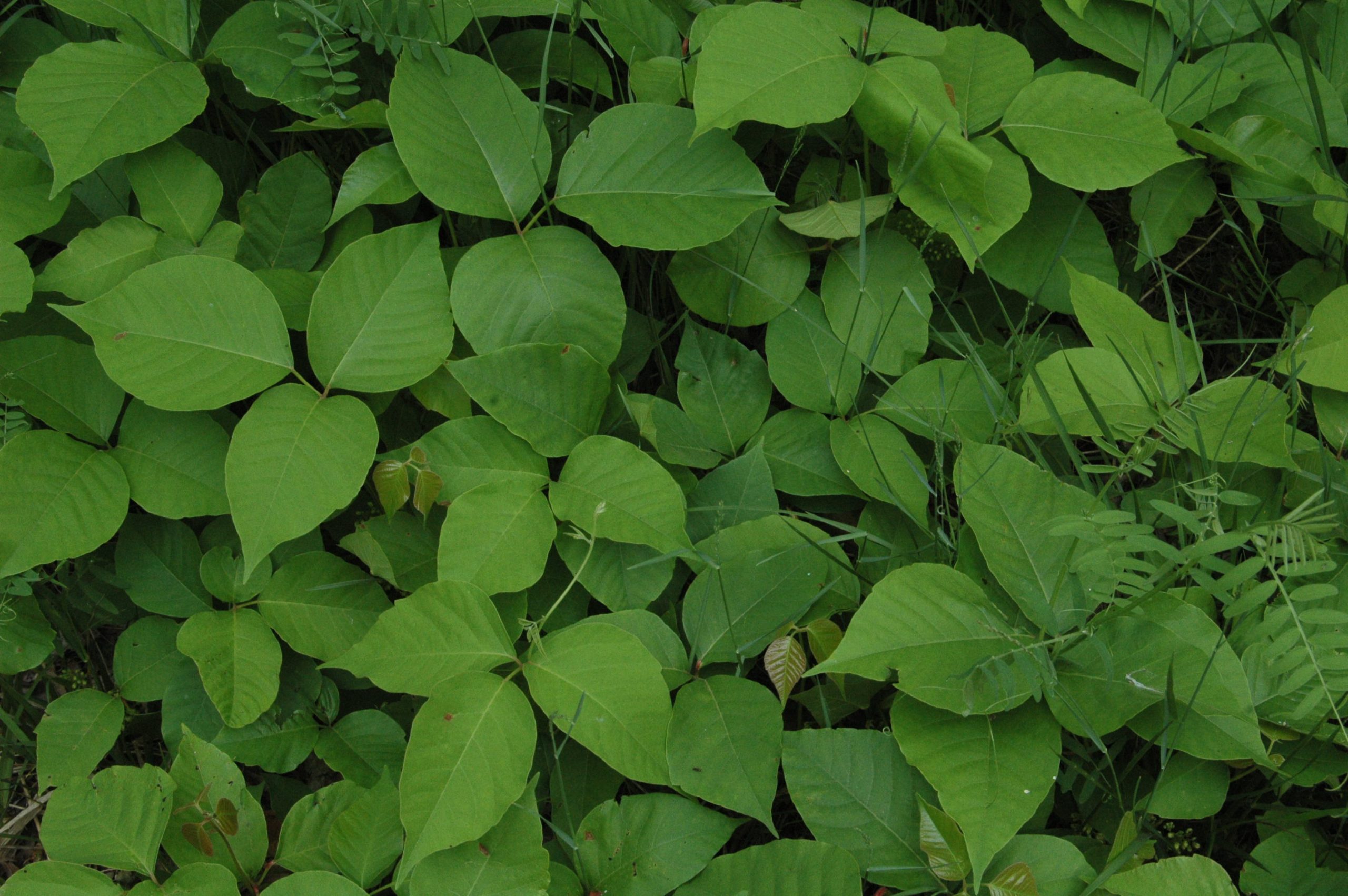
If poison ivy still piques your curiosity (pun intended), I invite you to consult this article by Larry which explains what triggers the itching and the best remedies to relieve it. It’s not the first time, nor will it be the last, that I’ll catch poison ivy in my life. My desire to explore plants always outweighs any occupational hazards!
0 comments on “Would You Be Able to Identify Poison Ivy?”