
As with all fruits and vegetables, a freshly picked pear, eaten immediately, is nothing compared to one imported from another province (or country). And since pear trees thrive so well in our northern climate, why go without? Here are some tips for successfully growing pears near Quebec province.
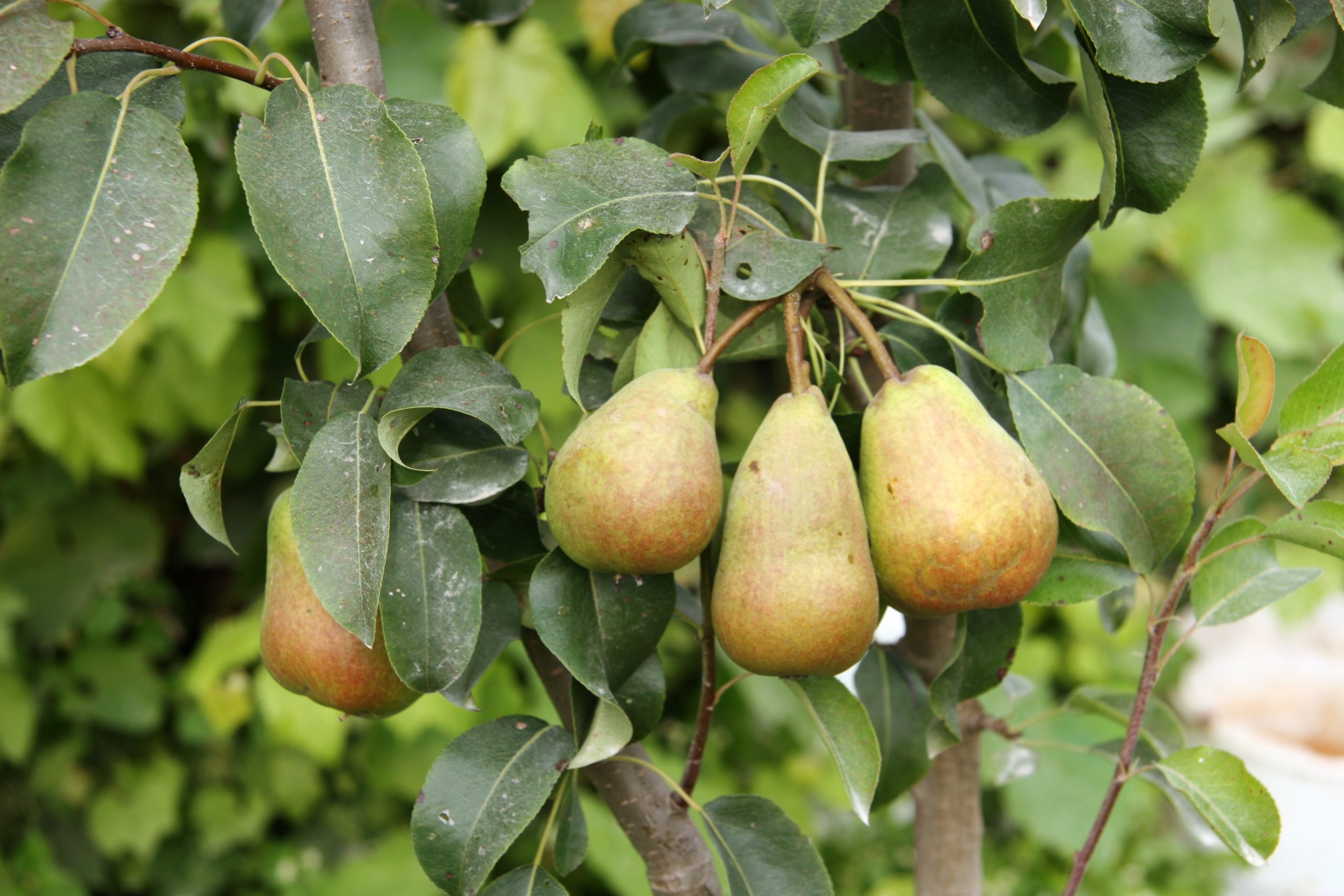
How can we dislodge the apple from the pedestal of fruit trees to grow in your yard? By demonstrating the value of hardy pear trees. Pear trees grow just as easily and, what’s more, they are generally less affected by insects and diseases. They are also trees that thrive in clay soils, a common constraint in Quebec’ landscape. Finally, the proof is no longer in doubt: pear trees are perfectly hardy, even surprisingly hardy, and they produce with surprising generosity.
Some Interesting Pear Varieties
Of the 1,500 different pear tree cultivars available worldwide, approximately thirty are perfectly suited to harsh winters. This is ample to allow for a selection that meets the specific needs of the moment.
Some pears, such as ‘Bartlett’ and ‘Anjou’, are already well known to consumers and grow relatively well further south, in zone 5 (USDA Zone 4). However, they are easily outclassed by other pears that are much hardier and more interesting. For example, the ‘So Sweet’ pear has the ability to grow and fruit beyond the 50th parallel. Abitibi and Lac-Saint-Jean are its favorite playgrounds. For flavor and a high sugar content, ‘Savignac’, ‘Ste-Sophie’, ‘Julienne’ or ‘Northbrite’ pears are worth looking for. You should also look at pear trees developed in Russia, such as ‘Krazulya’, for near perfection in terms of taste, disease resistance and productivity.
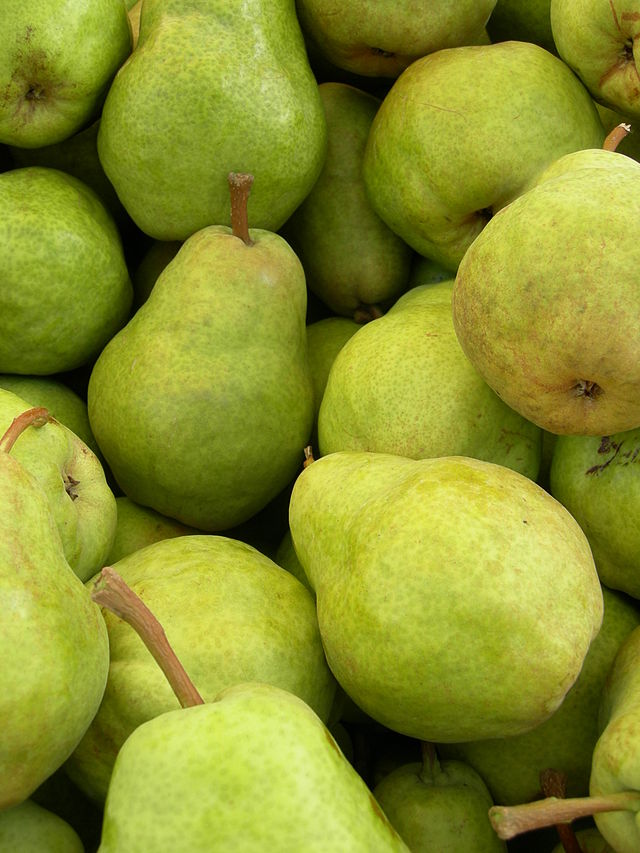
Pear trees are not immune to invaders, but it is bacterial blight that is most to be feared. Here again, certain pear trees stand out in this regard, notably ‘Summercrisp’, ‘Patten’ or ‘Lorraine’ which have good resistance to this parasite.
For those who want to prolong the enjoyment of fresh fruit, ‘Julienne’, ‘Luscious’ and ‘Summercrisp’ are excellent storage pears that can be kept fresh for several months. The ‘Flemish Beauty’ pear is even said to remain tasty until January. And if the new toy in the house is a dehydrator, the Pépinière aux Arbres Fruitiers says on its website that it is the ‘Ure’ pear that gives the best results!
Careful Planting = Longevity
As with all trees planted for posterity, careful planting of pear trees pays dividends in the long run. First, dig a hole twice the size of the pot or root ball. Loosened soil around the plant encourages root spread and promotes good growth. To the excavated soil, add about one shovelful of compost for every four shovelfuls of soil. Then, small treats, such as a natural granular fertilizer, can be added, following the manufacturer’s recommendations. If you want to benefit from mycorrhizal inoculants during planting, it is best to apply them directly to the roots or sprinkle them over the roots at planting time. While not mandatory, these “little treats” are still beneficial.

Next, position the pear tree by observing the tree’s branches and ensuring that the soil level in the pot is at the same height as the soil level in the location. Should I specify that the pot must be removed? Replace the soil around the root ball, lightly tamping the soil. Then, with the excess soil, form a donut around the tree, which will serve as a basin to retain the irrigation water. In windy areas, install a stake to prevent the unrooted tree from tipping over. Where the field mouse is king, protect the base of the young trunk with a protective tube.
What About Asian Pears?
These beautiful, round, crisp pears, delicately packaged and sold at a premium price at the grocery store, are also excellent candidates for northern gardens. About ten cultivars are scattered across the Quebec market, for those who know how to find them.
Go for the Duo
Now let’s address a very important detail: pollination of pear trees. The rumor is true: in many cases, it takes two different pear trees to produce fruit. Fortunately, some pear trees are exceptions to this rule. The ‘Loma’, ‘Julienne’, ‘So Sweet’, and ‘Flemish Beauty’ pear trees are self-fertile, meaning they can produce fruit from their own pollen. These are therefore interesting cultivars for small yards. That said, even for these pear trees that are capable of fruiting on their own, a second pear tree is always ideal.

Bees and other pollinating insects are essential to the success of the “Fruit Project”. It’s interesting to learn that pear blossom nectar isn’t very sweet, making it less appealing to insects. Luckily, pear trees bloom a little before apple trees, giving them a slight head start… except when spring is cold.
No matter, year after year, the fruits are always there. Plenty and tasty.

I have a pear tree that we planted about five years ago, and it hasn’t flowered for four years! Any ideas, fellow readers? I fertilize it with a tree fertilizer every spring and fall and usually once in the summer.
I didn’t realize so many varieties are hardy!
Very timely information for me
Thank you
I’m writing from PEI.