
It’s wonderful to see more and more cut flower growers. Dozens of multicolored tulips in spring, beautiful country-style bouquets in summer, and large gladiolus sprays in fall… I’m in! And local flowers? Even better! So it’s no wonder we’re all inspired to grow a few plants in our own gardens to create inspiring bouquets!
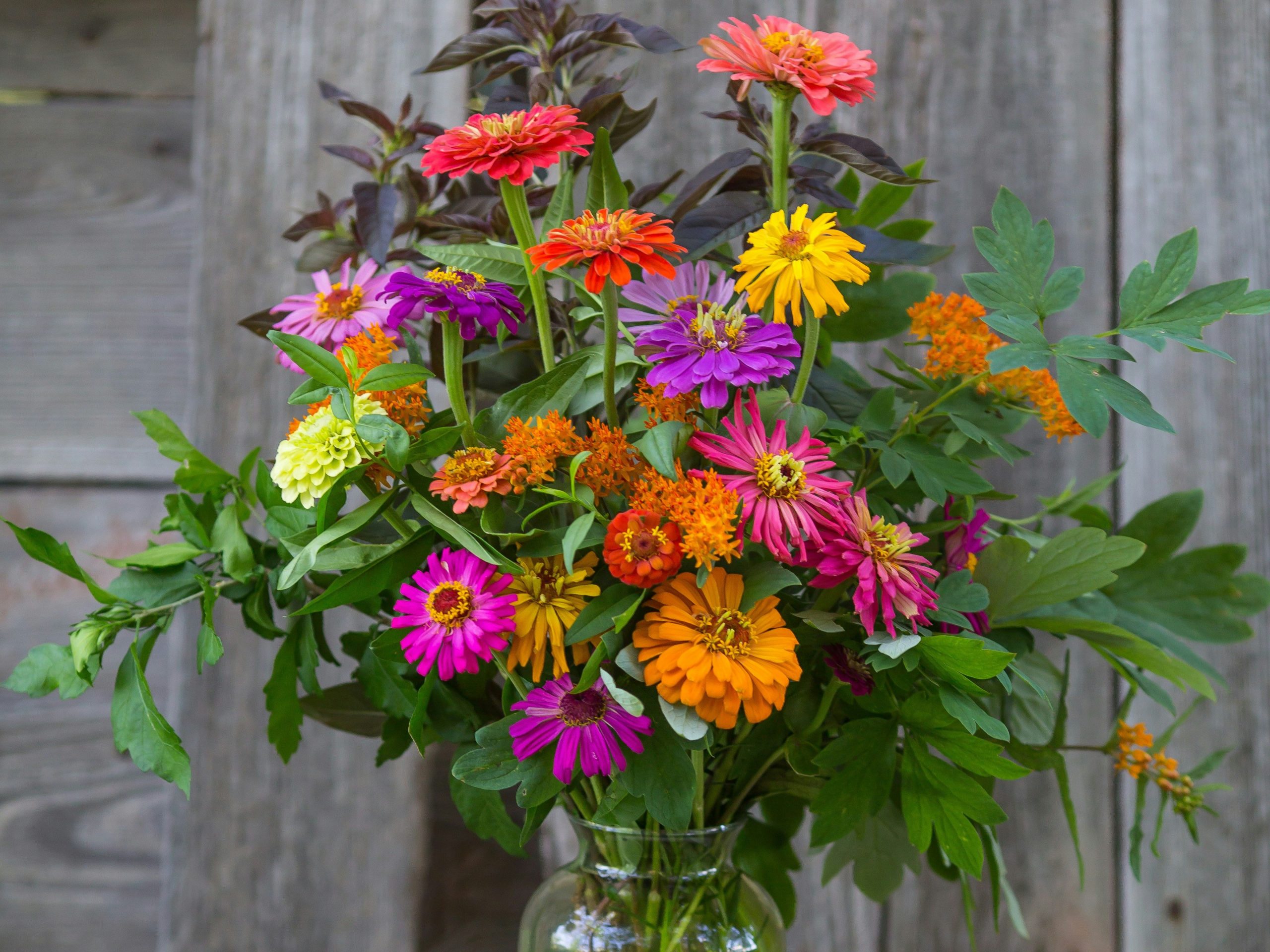
Annuals are an excellent choice for beginner gardeners or aspiring flower arrangers. The best annuals for cut flowers are easy to grow and quick-growing. Here’s a selection of my personal favorites. They’re nothing too extravagant, but they’re still beautiful annuals for bouquets.
1. Zinnias
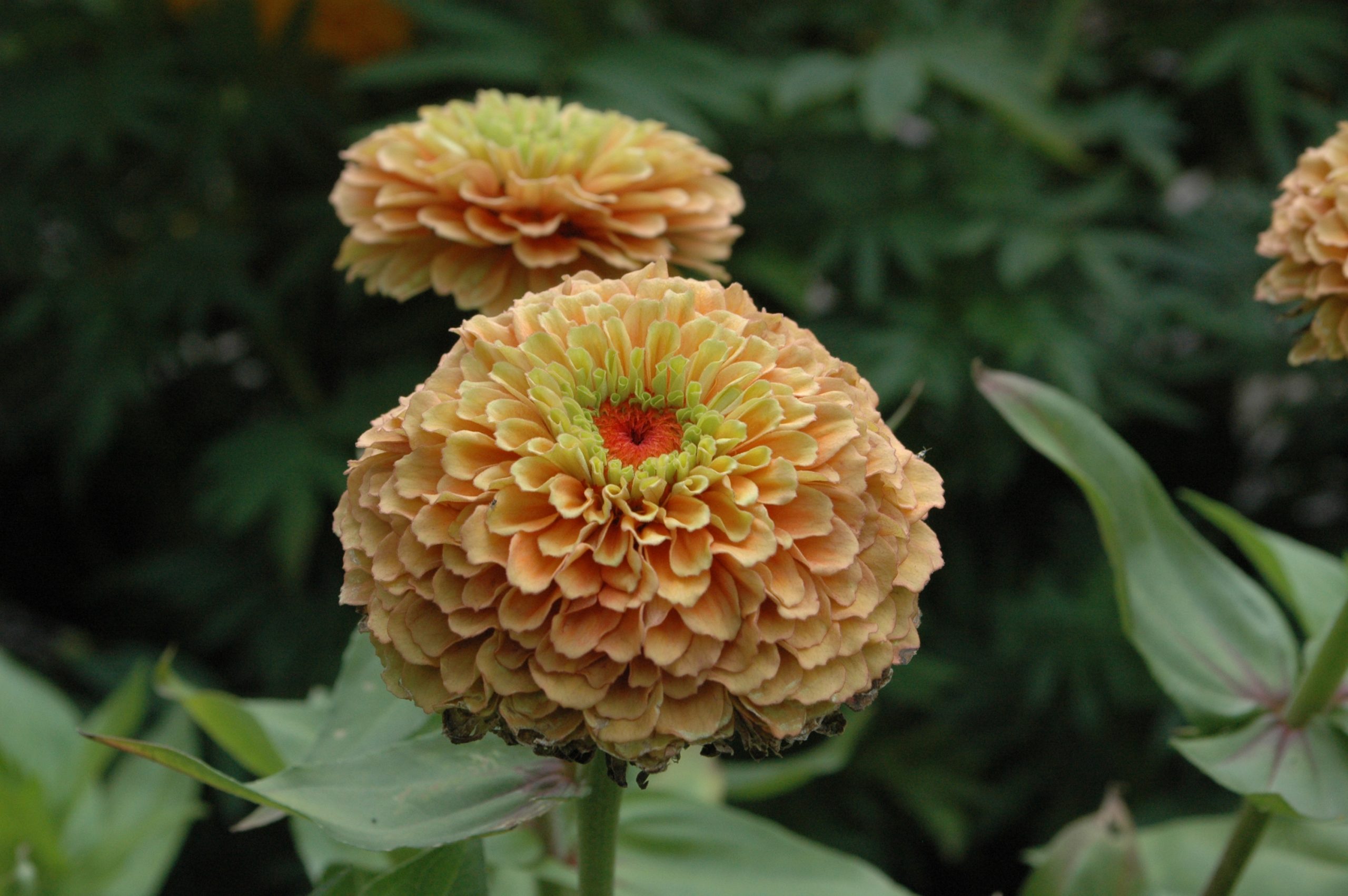
If I had to pick just one, it would be this. Zinnia flowers are beautiful and last a long time in bouquets. Plus, they offer a rainbow of colors! Whether you prefer bright colors or more earthy tones, you’re in for choice!
Last year, I grew the ‘Queeny Lime Orange’ zinnia, which I absolutely loved. The plants reached 60 to 75 cm (24 to 30 inches) in height and produced beautiful long stems that were perfect for bouquets! But it was the color, which ranges from light orange to lime green, that truly captivated me. Like many people these days, I’m drawn to soft, warm, and slightly vintage tones. So, I’m going to delve deeper into the ‘Queeny’ series to satisfy this craving for floral delicacy. For those who prefer bolder colors, the zinnias in the ‘Benary’ or ‘Oklahoma’ series are excellent options.
2. Cosmos
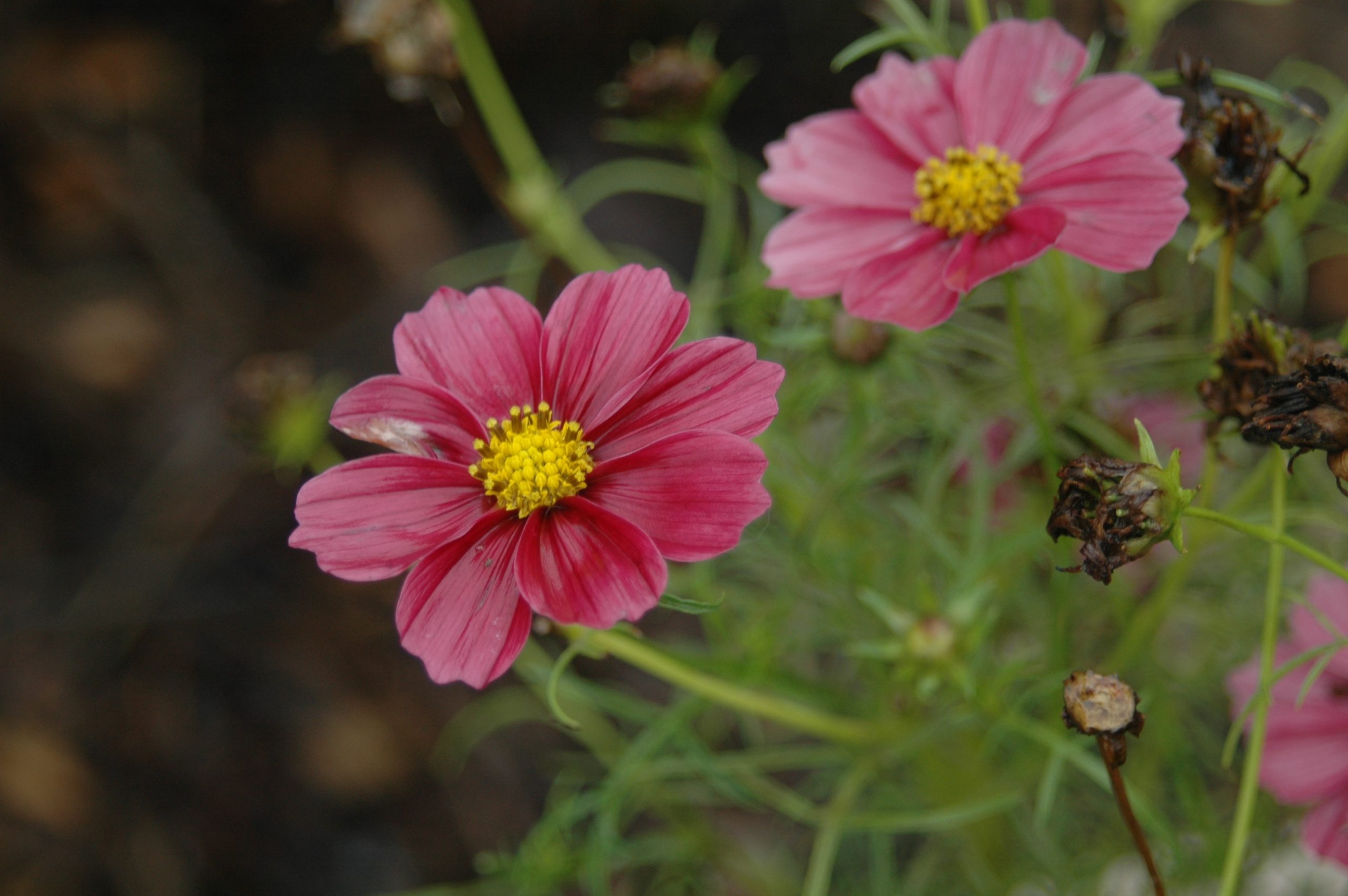
Well known to fans of easy-to-grow flowers, cosmos (Cosmos bipinnatus) produce large blooms that are quite charming in bouquets. Furthermore, their finely cut foliage adds a delicate texture. Thus, even without flowers, the cosmos foliage is a beautiful addition. Extremely easy to grow from seed, the secret to having beautiful cosmos plants is to avoid over-fertilizing. Indeed, if the plants are over-fertilized, they won’t flower!
Personally, I’ve had a lot of success with the Sonata series, even though they’re a bit shorter (around 45 to 60 cm [18 to 24 inches]). I’ve also harvested beautiful flowers from the ‘Antiquity’ and ‘Sensation Picotee’ cosmos. Unfortunately, in my case, the double-flowered cosmos didn’t impress me. They always look better in photos…
3. Sunflowers
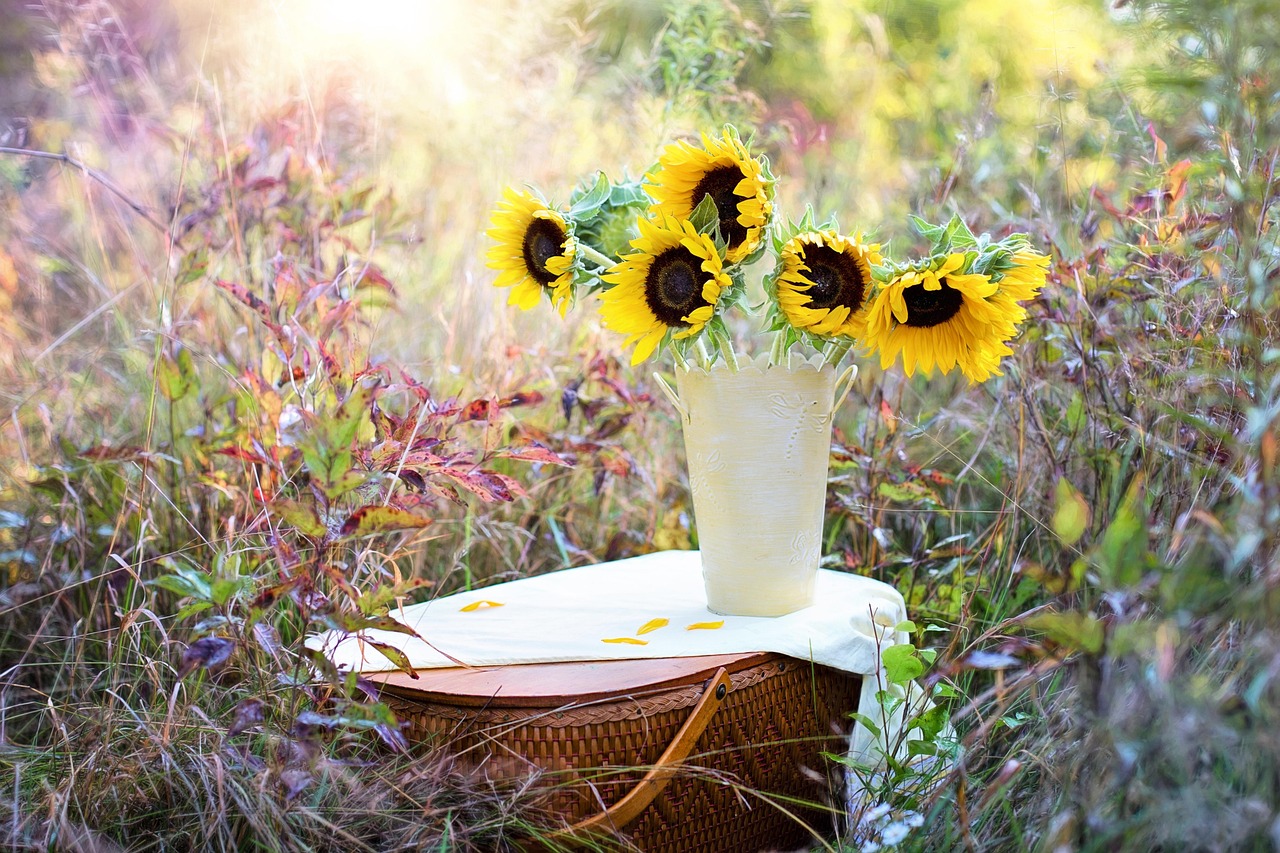
For cut flowers, look for slightly shorter varieties with a flower diameter of around 10 cm to 15 cm. ‘Claret’, ‘Limoncello’, ‘White Nite’, ‘Provence’ and the sunflowers in the Sunrich series make lovely arrangements. Note that sunflowers aren’t only sunny yellow; you can also find pale yellow flowers and shades of orange, brown or burgundy.
Sunflowers are sown directly outside. To obtain magnificent and abundant flowers, they need plenty of water and fertilizer. It is advisable to stake the stems and pinch off any side buds (if present) to encourage long, straight stems.
4. Annual rudbeckias
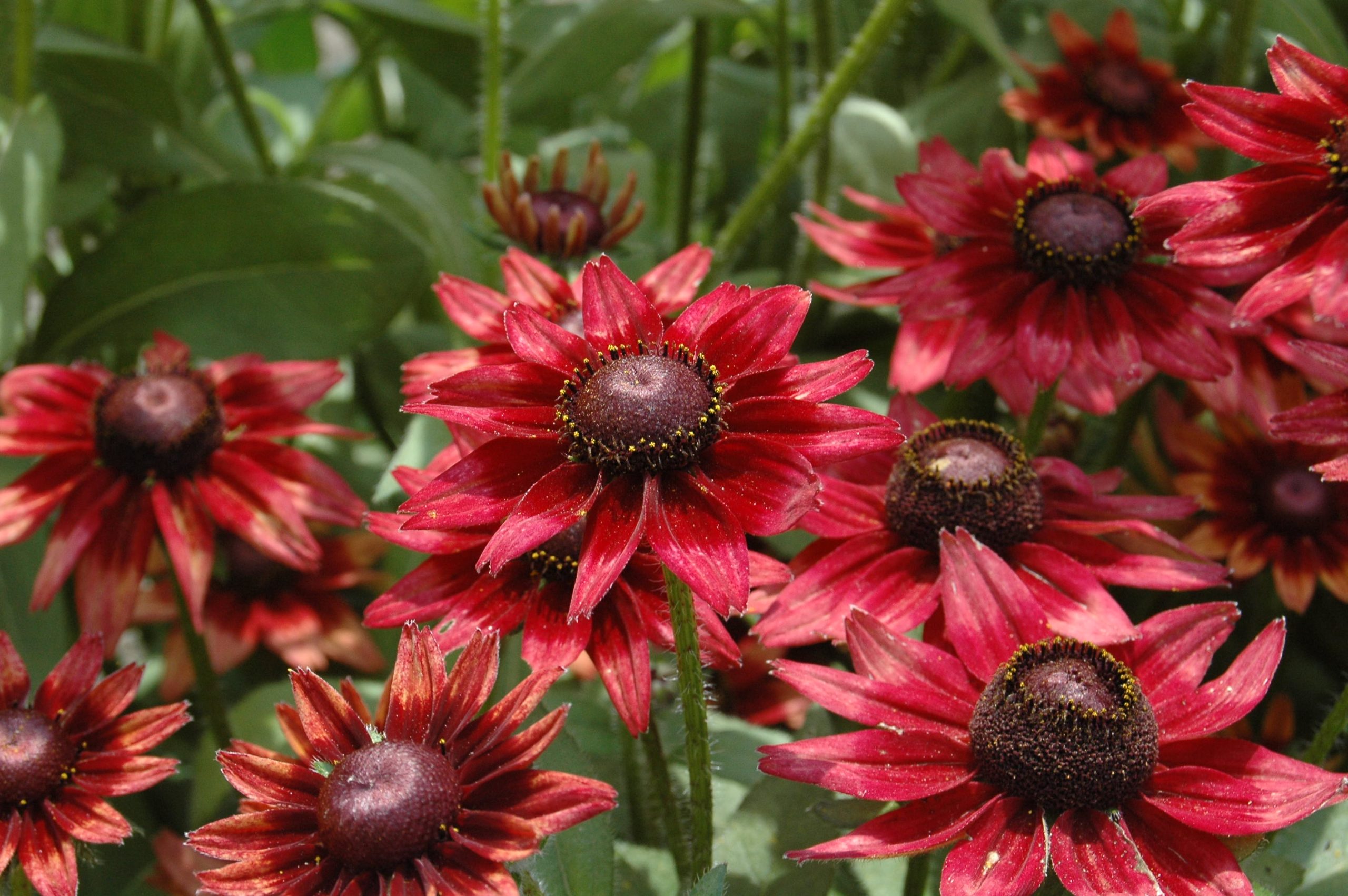
Everybody knows the perennial ’Goldsturm’ rudbeckia and its bright yellow flowers. But among annual rudbeckias, there’s a beautiful selection of colors other than the typical bright yellow. I’ve had lovely results with the burgundy flowers of ‘Cherry Brandy’, and even though they are a very bright yellow, I never get tired of ‘Prairie Sun’, which has a white center instead of the classic dark brown. I’m intrigued by ‘Sahara’, with its pale pink flowers tinged with orange.
Of course, rudbeckias will be harvested in time for autumn bouquets. Throughout the summer, it’s a good idea to pinch off the side buds to encourage the growth of long, straight stems.
5. Amaranths
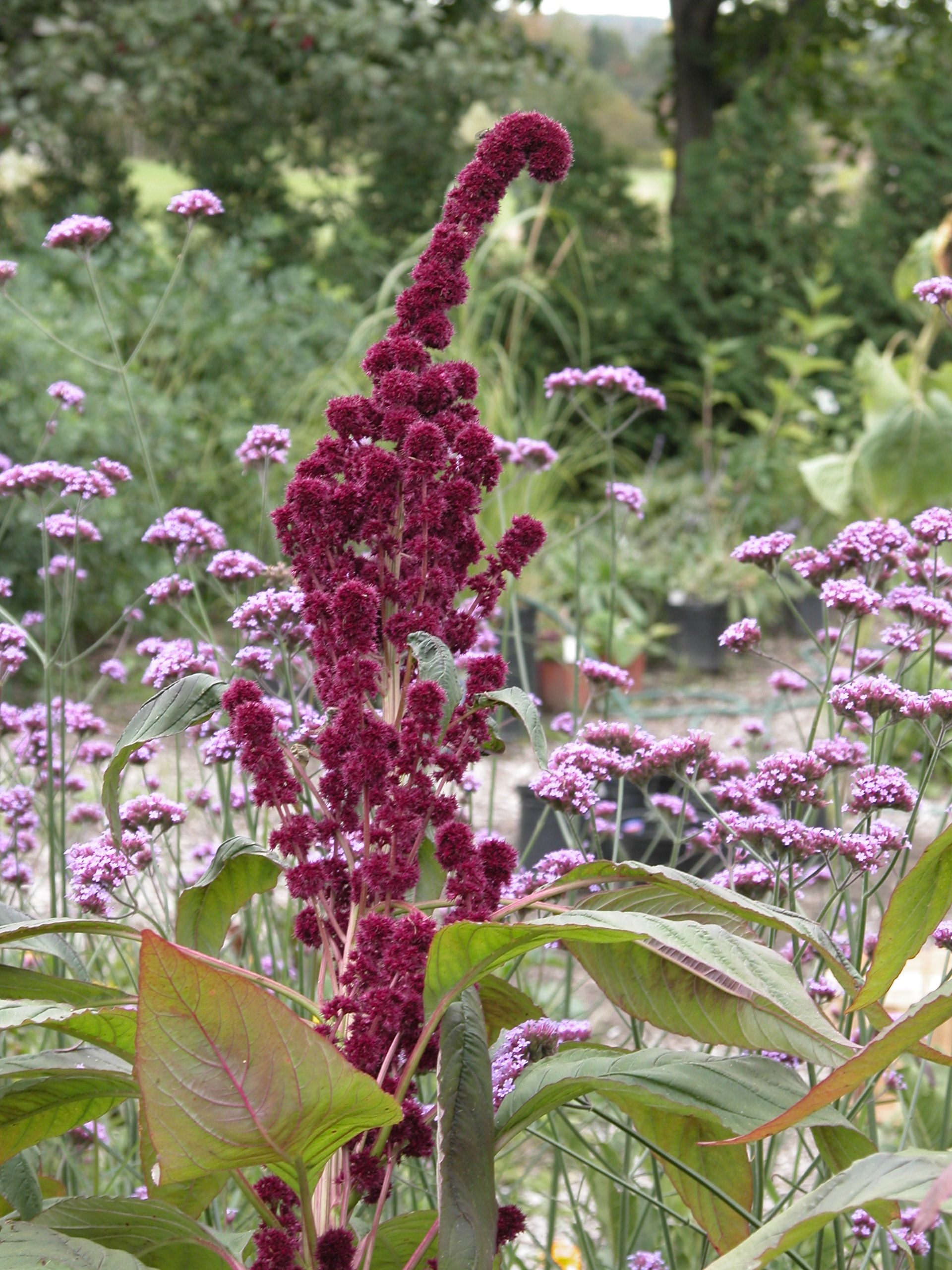
Large, colorful flowers are important, but our bouquets also need structure and shape. This is where amaranths come in handy. While amaranths come in an impressive variety of shapes and colors, we’ll focus primarily on the drooping varieties. The famous foxtail amaranth is one of them, but you can also find drooping green inflorescences like ‘Emerald Tassels’ or ‘Green Tails’. As for upright varieties, ‘Green Thumb’, ‘Velvet Curtains’, and ‘Fat Spikes’ can bring drama to the bouquet! I also have a double interest for the amaranth used for grain production, Amaranthus hypochondriacus, which produces pretty upright panicles of burnt orange color.
Amaranths are generally large plants that require plenty of space in the garden. They need to be watered generously to encourage abundant flowering.
6. Gomphrenas
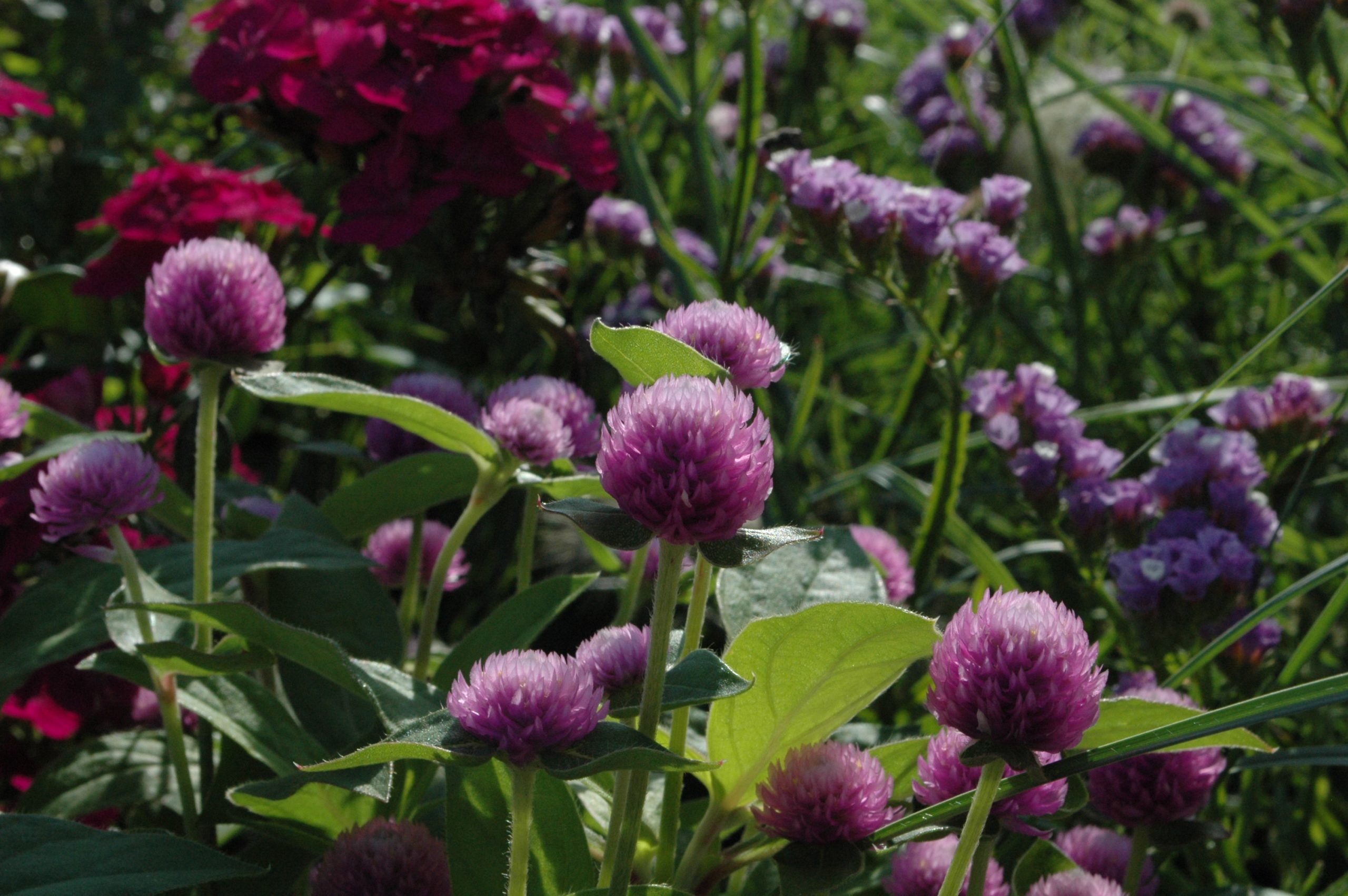
These beautiful, papery, globular flowers are becoming increasingly well known. Gomphrenas are planted in large clumps in several cities in the province of Quebec. This speaks volumes about their drought tolerance and ease of cultivation.
The challenge with gomphrenas is finding varieties with long stems. Despite reaching only 45 cm (18 inches) in height, ‘Ping Pong Purple’ remains one of my favorites, and I also love the soft mauve of ‘Audrey Pink’. Often, taller varieties have flowers that are less and less pom-pom-like. That said, the QIS series offers flowers with slightly longer stems.
7. Pot Marigolds
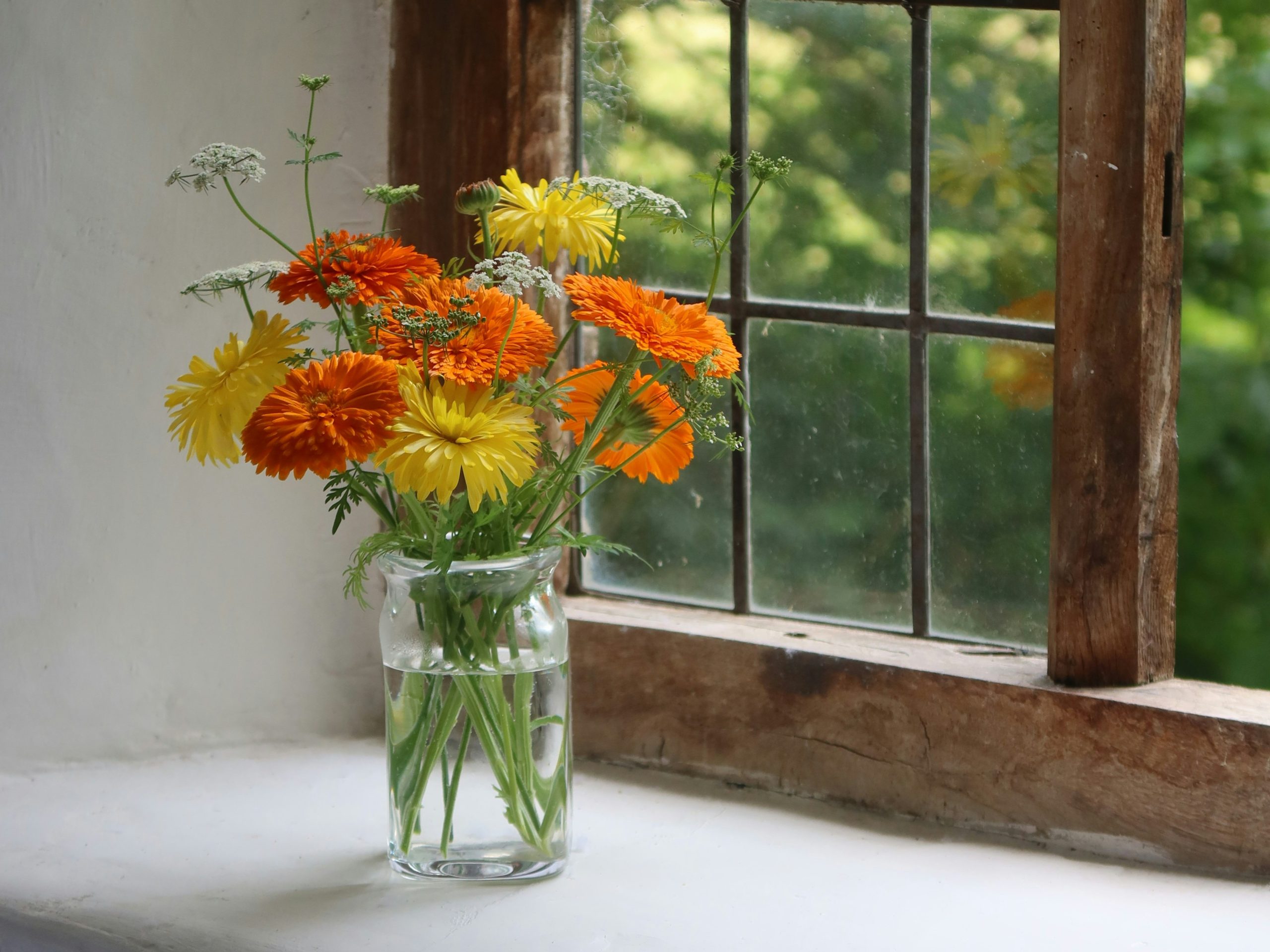
One wouldn’t normally think of adding pot marigolds (Calendula officinalis) to a list of cut flower plants, and yet… While small plants of only 30 cm (12 inches) are common, some varieties produce longer stems that are more sought after for bouquets. This is the case with ‘Snow Princess’, with its creamy-white flowers, and ‘Neon’, with its deep orange blooms. Both varieties reach 70 cm (28 inches) in height. In addition, there are ‘Oopsy Daisy’, ‘Indian Prince’, ‘Balls Orange’, and ‘Orange Porcupine’, which are specifically bred for cut flowers.
Pot marigolds are easy to grow from seed. Along with cosmos and sunflowers, they form the trio of “super-easy-to-sow-annuals-that-make-beautiful-cut-flowers”.
8. Love-in-a-Mist
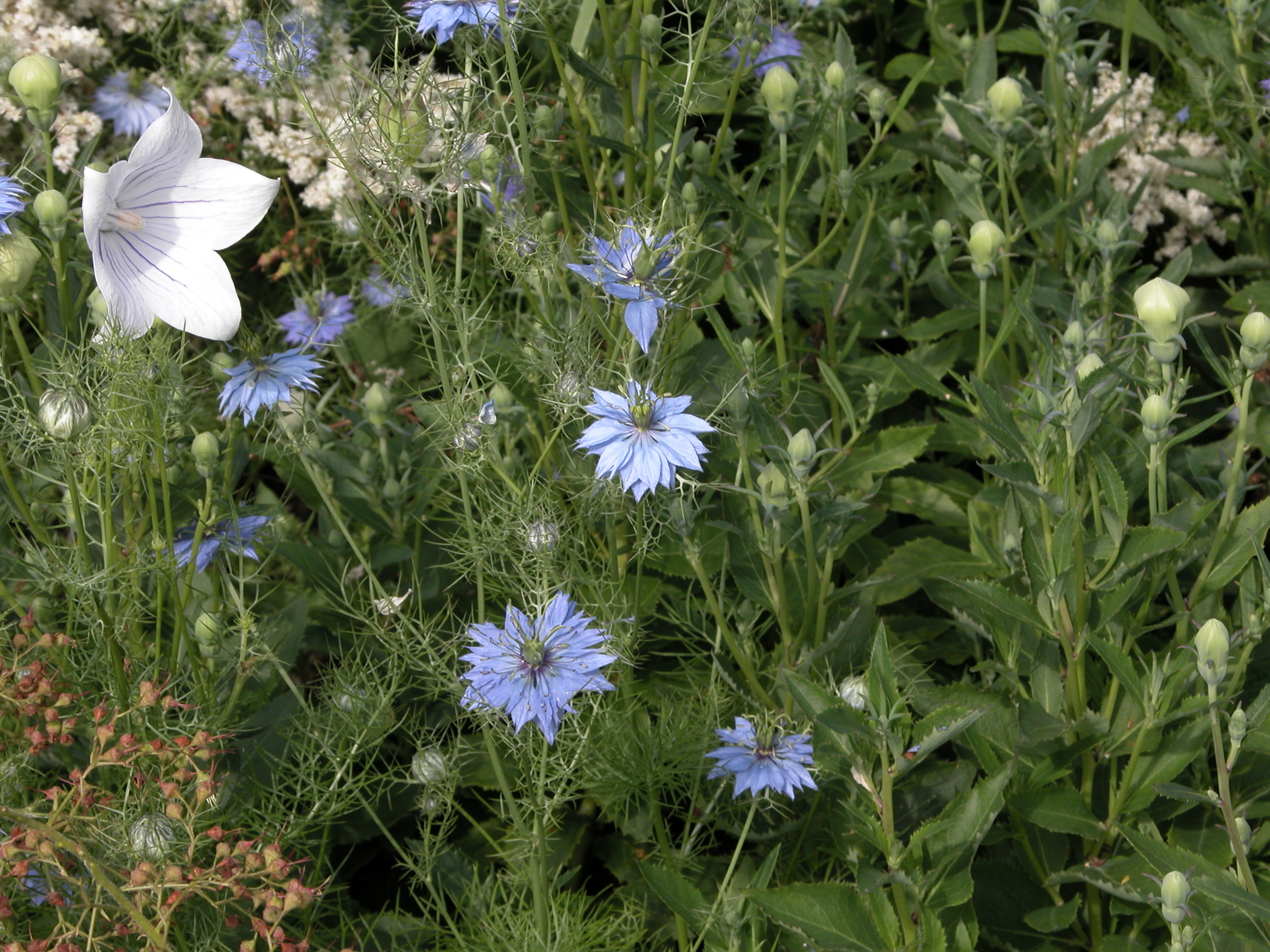
We’ve now arrived to the less common annuals. Indeed, you rarely find love-in-a-mist (Nigella damascena) sold in trays at garden centers! And yet, they are very easy to grow. You can sow them indoors or directly outdoors. These are full-sun annuals that will thrive in rich, fertilized, and well-watered soil.
While blue and mauve flowers are the most common, you can also grow ‘African Bride’ with white flowers, 60 cm (24 inches) tall, or ‘Delft Blue’ with lilac and purple speckled flowers, 70 cm (28 inches) tall.
Firstly, and interestingly, love-in-a-mist also produce attractive dried fruits to add to late-season bouquets, alongside strawflowers and gomphrena. Secondly, cultivated nigella (Nigella sativa), which is also a beautiful annual for bouquets, produces dark seeds known as black cumin, with remarkable properties. An old Arabic proverb says that “in black seed lies the cure for all diseases, except death.”
9. Strawflowers
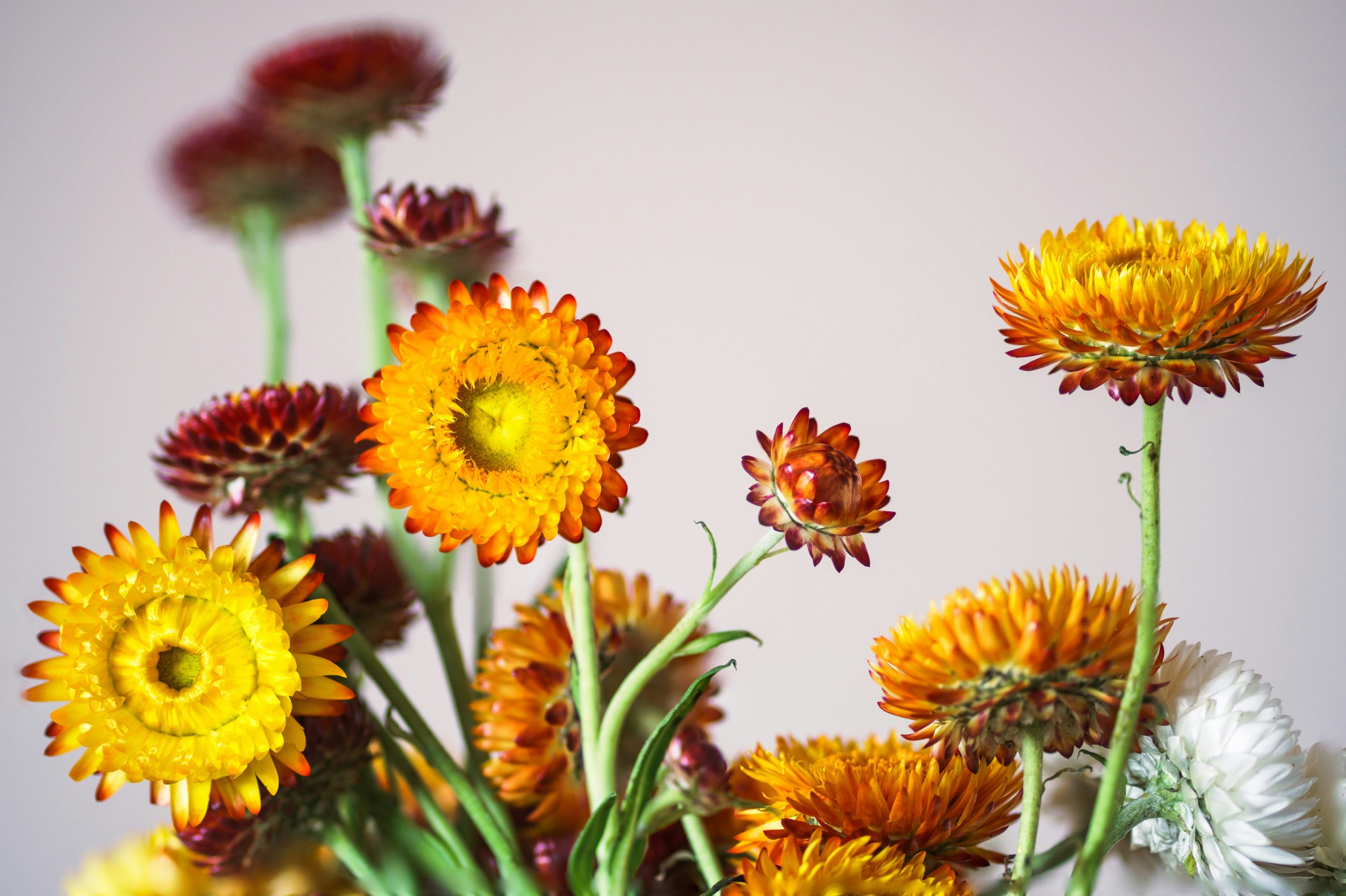
I hesitated before suggesting strawflowers (Xerochrysum bracteatum, syn. Helichrysum bracteatum). It’s a true classic when it comes to cut flowers. These pretty pompom flowers have a papery texture and dry while retaining their beautiful colors. Therefore, they are ideal for both fresh and dried flower arrangements.
My hesitation comes from the fact that they’re often sold as a mix of yellow, orange, and red flowers… and pink and white… In short, the resulting color harmony was far from appealing. But luckily, we now have varieties with separate colors! The ‘Swiss Giant’ series, with its 90 cm (35 inches) long stems, is definitely worth checking out. I also have a soft spot for ‘Nevada White’.
10. Bells of Ireland
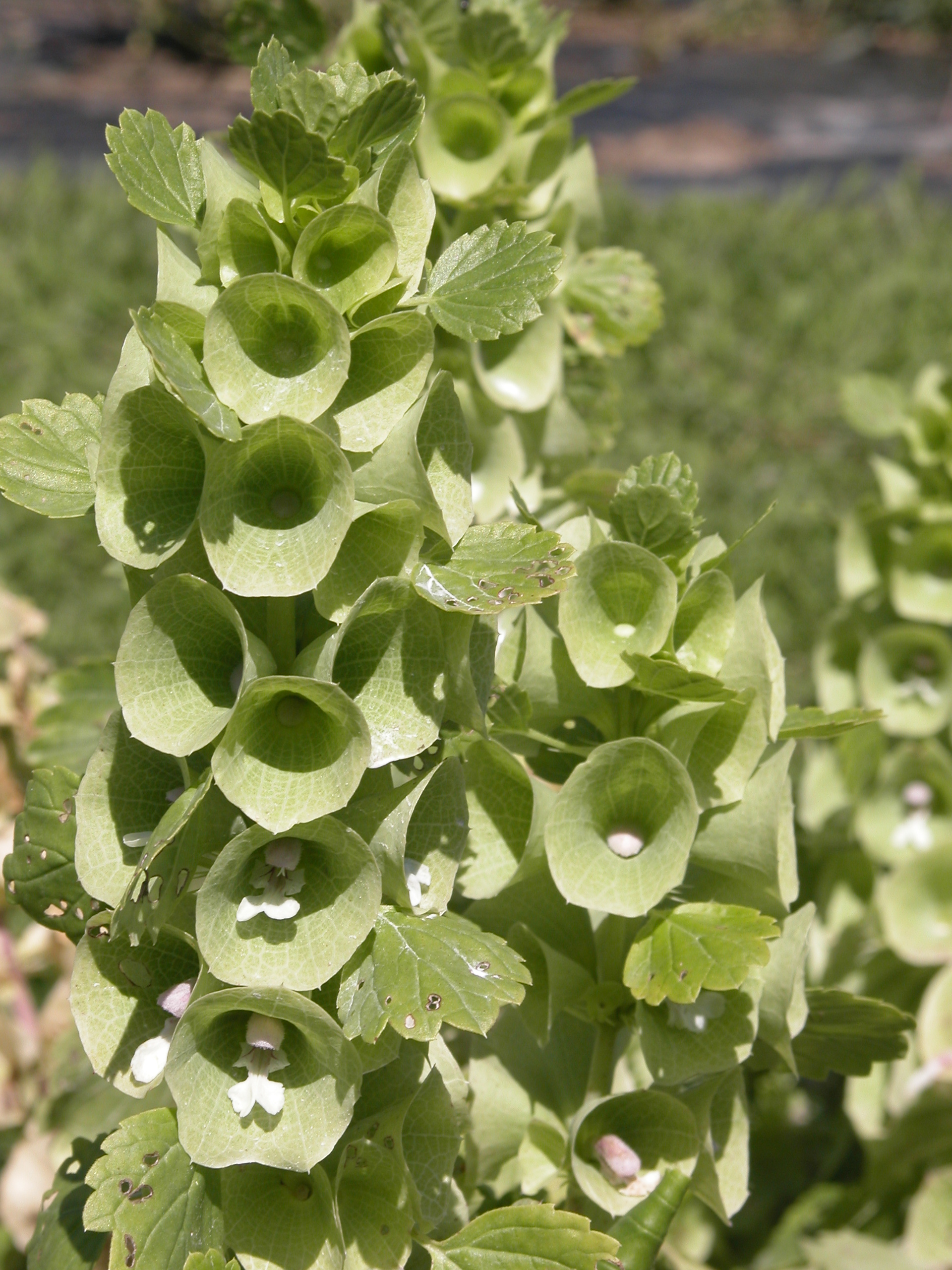
With their strange green, tubular bracts, the bells of Ireland (Moluccella laevis) are sure to get attention! Perfect for adding verticality to a bouquet, they are also surprisingly easy to grow from seed. While the slightly crooked stems add a touch of expressiveness to some bouquets, I recommend staking the stems to encourage straight flower spikes.
To my present favorites, we could add some cornflowers (Centaurea cyanus), Chinese asters (Callistephus chinensis) and also corn cockles (Agrostemma githago)! No self-respecting bouquet is complete without gypsophila ‘Covent Garden Market’. A perfect filler plant, this annual variety can reach 50 cm (20 inches) in height. It’s advisable to sow it in large quantities, over a few weeks and densely, to obtain a sufficient number of flowers.
As for the false Quenn Ann’s lace (Ammi majus), celosias, clarkias or lisianthus, which also make splendid cut flowers, I would advise them to more experienced gardeners, as sowing or cultivation requires a little more attention.
And then some more. I’d like to cheat a little by also highlighting tender bulbs. These are rhizomes, tubers, or fleshy roots that are planted in the spring and lifted in the fall. In a way, they’re annuals, as they don’t survive the winter. Of this group, dahlias and gladioli are the most popular, and these flowers make fantastic bouquets.
Pokepath is perfect for players who enjoy both strategy and collecting creatures. The progression feels smooth, and I never feel bored because there’s always something new to unlock or improve. I also love the map designs because they force players to think carefully about positioning and defense planning.
Stay ahead of the game with the fastest data feeds on Peachexch com. Get your Peachexch ID now and experience why Peachexchange is India’s leading destination for strategic gaming.
solitaire is more than just a card game – it’s a way to improve concentration, enhance problem-solving skills, and enjoy a quiet moment of fun anywhere, anytime.
Very nice and needed article but I hoping to learn which of these is a true pollinator benefitor, particularly the zinnia, which I have always wanted to plant. Please include such information in future articles. Most of us are limited in space and we want to know how to get that pollinator bang for the buck, even in a plant that may be used for cutting. Thank you.