
During this incredible springtime frenzy, which sees spring bulbs, lilacs and a variety of beautiful native woodland plants burst into life, an array of small white-flowering trees also appear in front of houses and along the edges of forests. Could it be an old apple tree? Or a wild cherry tree? Or perhaps a magnificent serviceberry? How can you tell them apart?
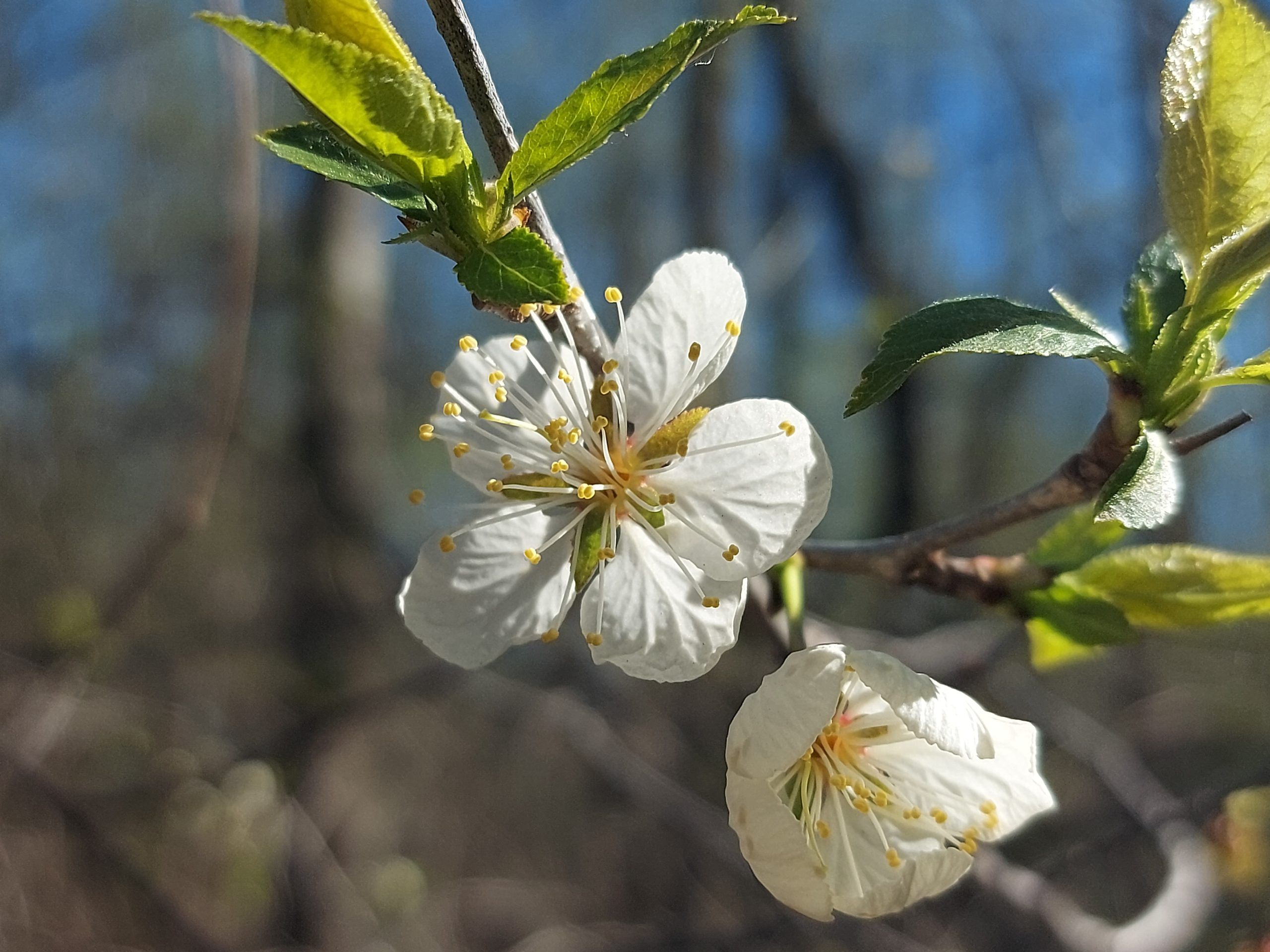
White flowers are plentiful in spring in both our gardens and the northern forests. In spring, flowers don’t have to try very hard to attract pollinators. Everyone wakes up hungry for pollen, and the first insects swarm in, forcing their way into barely open flower buds. Also, since most trees and shrubs haven’t fully developed their leaves yet, the white-flowering spring plants remain highly visible. This is partly why so many spring trees bear white blossoms.
Sometimes, during a stroll near a wasteland or a small forest, you might stumble upon a cluster of these trees with white flowers. If you look closely, you’ll see that there are several different species. The flowers aren’t all exactly the same. The same goes for the leaves that are just beginning to unfurl. Here is a short guide to the trees that brighten up the spring with their white flowers.
What unites them!
It’s not surprising that these different trees can be a little difficult to distinguish from one another, as they all belong to the same botanical family, the Rosaceae. A defining feature of this family is that its members develop flowers with five petals and numerous stamens. Therefore, counting the petals is not helpful for identification purposes.
Another common feature of these trees is that their leaves are arranged alternately along the branches. Fortunately, the shape of the leaves, their colour and their stage of leaf opening at the time of flowering can help us unravel these mysteries.
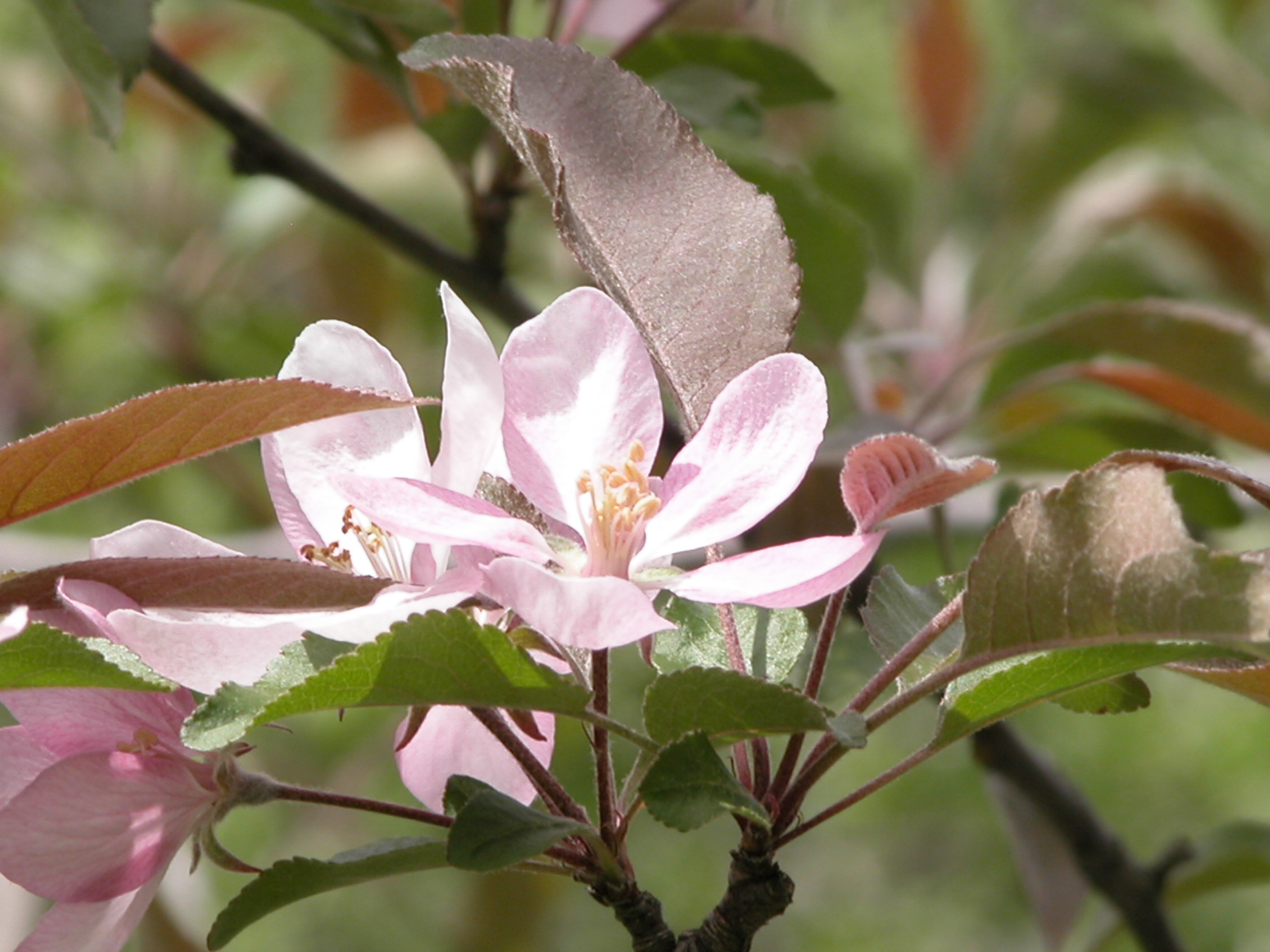
Apple trees… and crabapples!
If you’re in a residential garden, there’s a good chance that it’s an apple tree, but it could also be a cherry or plum tree. You’ll also find many “wild” apple trees that have escaped cultivation. Sometimes they are old varieties that were planted many years ago and then forgotten. Other times, it might be a self-seeded seedling that has sprouted from an apple core that was scattered far away. You can also identify apple trees by looking at their overall shape. If they are given space, apple trees tend to be as wide as they are tall. However, this isn’t always the case, as an apple tree growing in a tangle of vegetation will try to adapt!
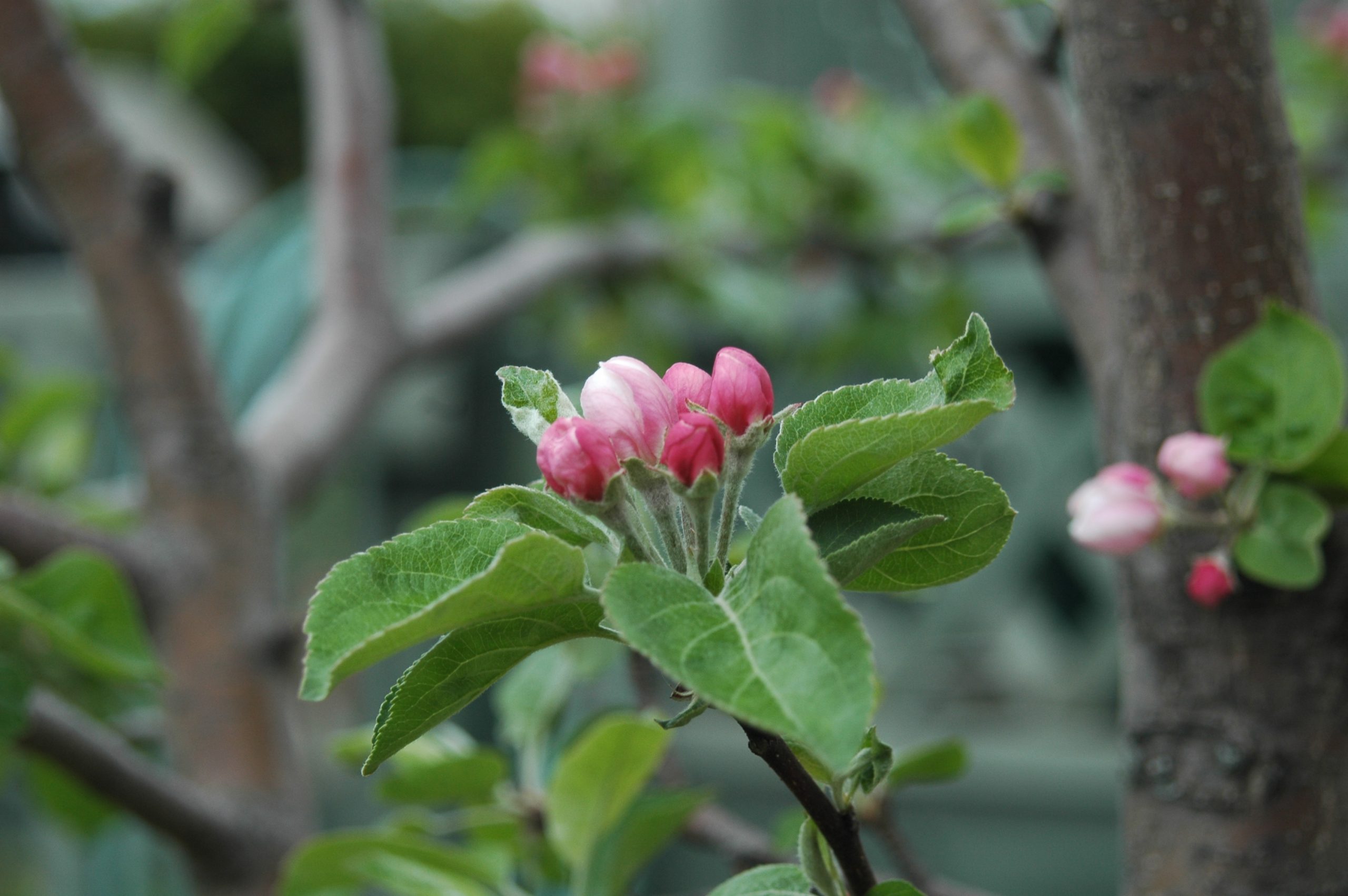
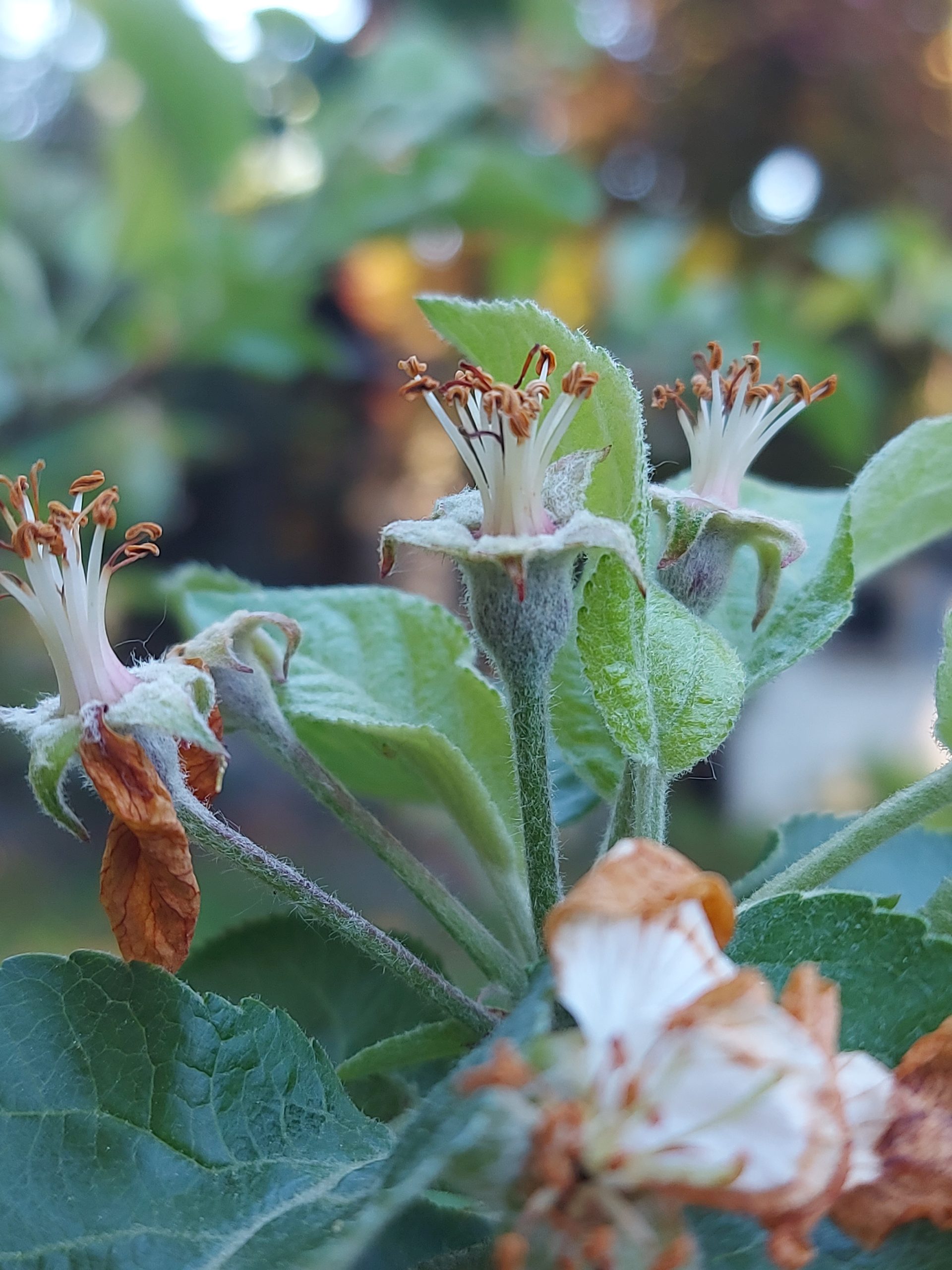
Apple blossoms are easily recognizable as they bloom in small umbels on very short branches, often called fruiting spurs. The flower buds start off dark pink, then turn pale pink, and finally the whole flower is white. As with hawthorns and serviceberries, the fruit develops beneath the flower. Remnants of the sepals remain when the fruit ripens.
It’s also worth mentioning that a tree with pink flowers or burgundy foliage, often found among smaller trees, is usually an ornamental crabapple. However, peach and apricot trees also produce pink blossoms albeit less commonly in northern climates.
Plum trees… and cherry trees!
It’s important to clarify that cherry, plum, peach, almond, and apricot trees all belong to the Latin genus Prunus. This is why some experts refer to “plum trees” as an umbrella term for all other fruit varieties (cherry, apricot, etc.). As this category includes several species of fruit tree, there are a few variations. As well as hundreds of ornamental varieties, there are also some native species, such as the well-known pin cherry (Prunus pensylvanica) and the black cherry (Prunus serotina).
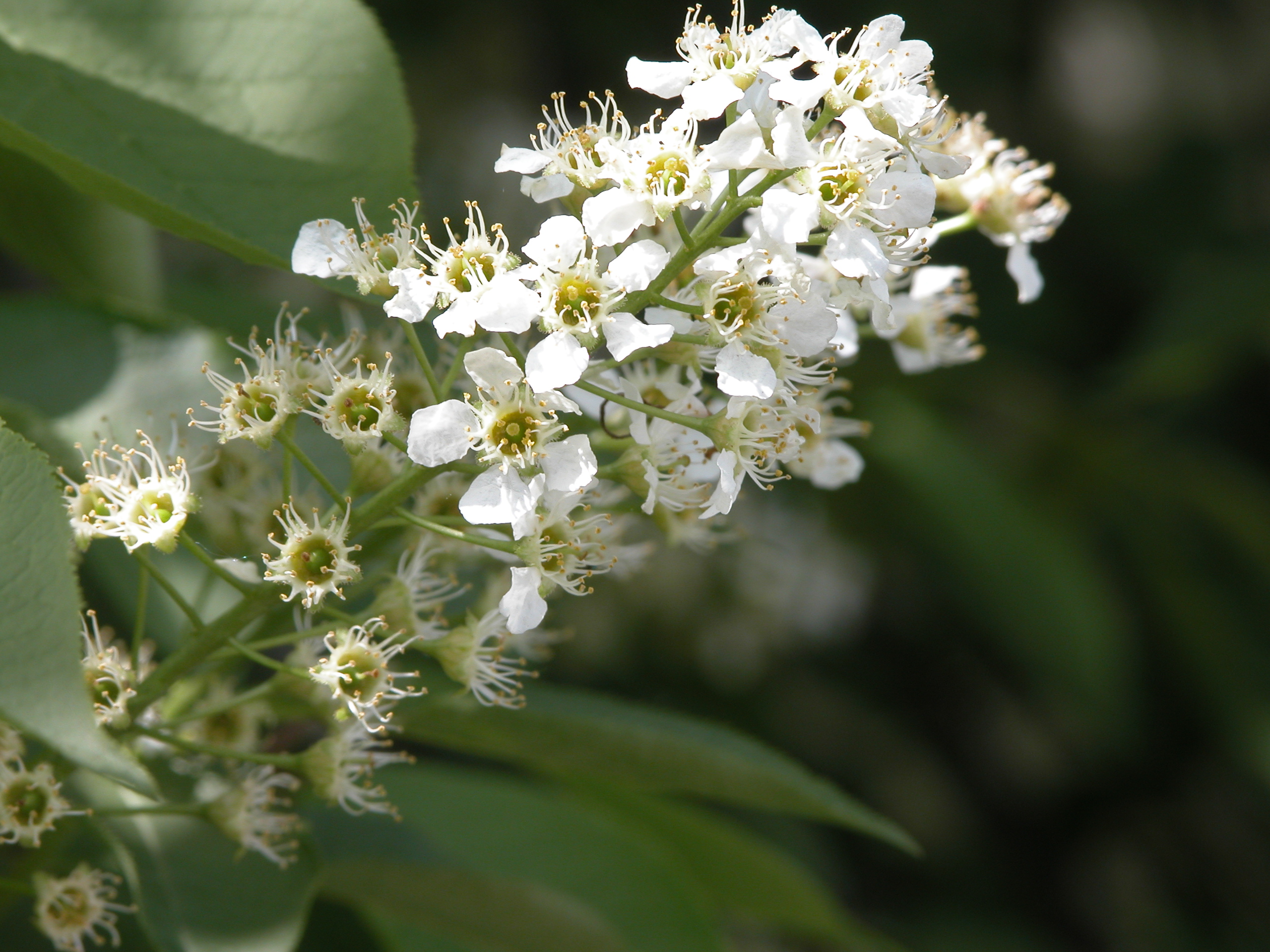
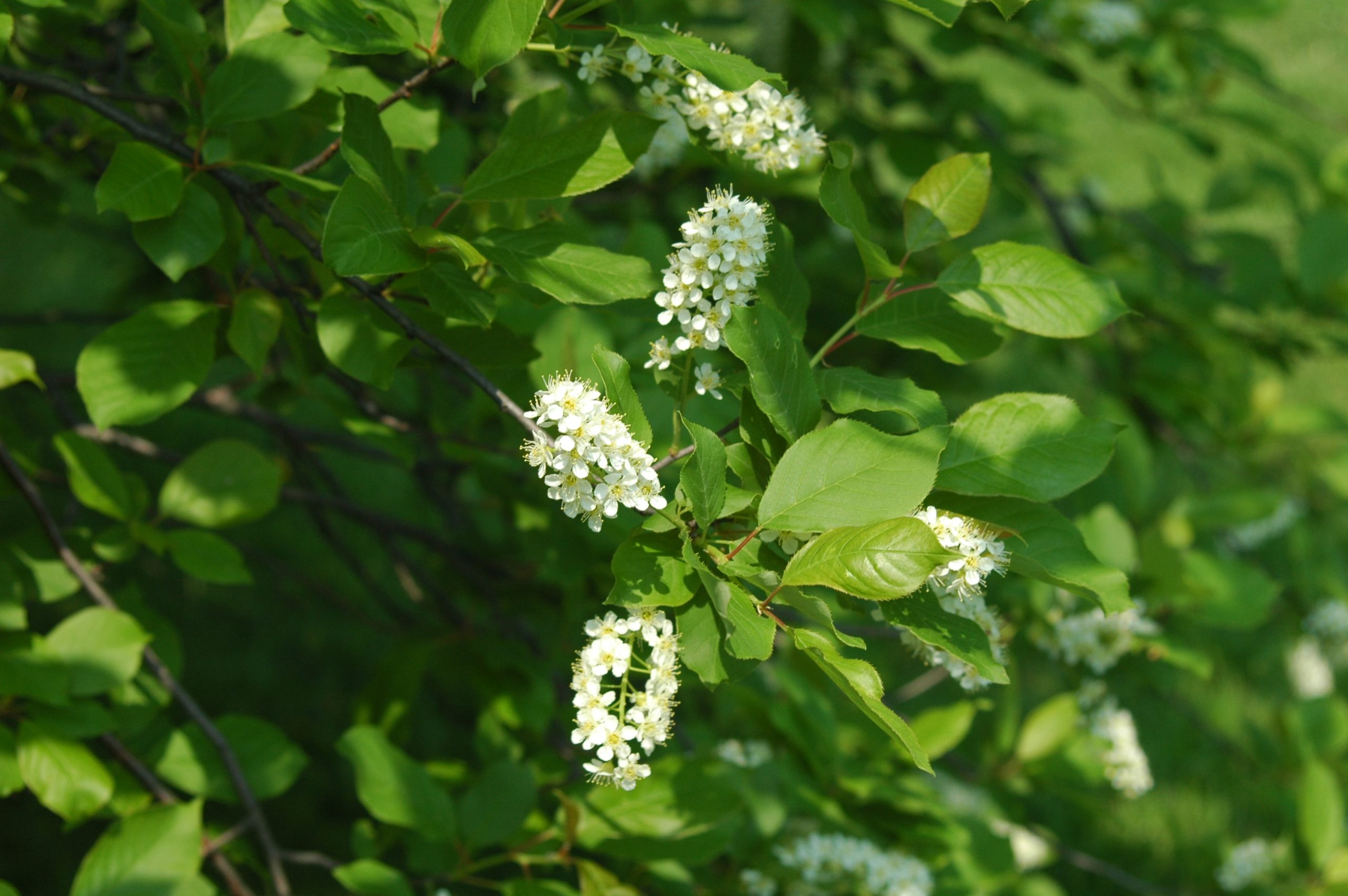
One thing is certain: of the four types of trees presented here, this genus is unique in producing fruit above the flower. This means that if you look closely at the flower, you will see that the future fruit is inside the flower. Prunus species can produce flowers in long, elongated clusters, but some produce small umbels of two to seven flowers. To make matters worse, some flowers develop on short spurs, like apple trees!
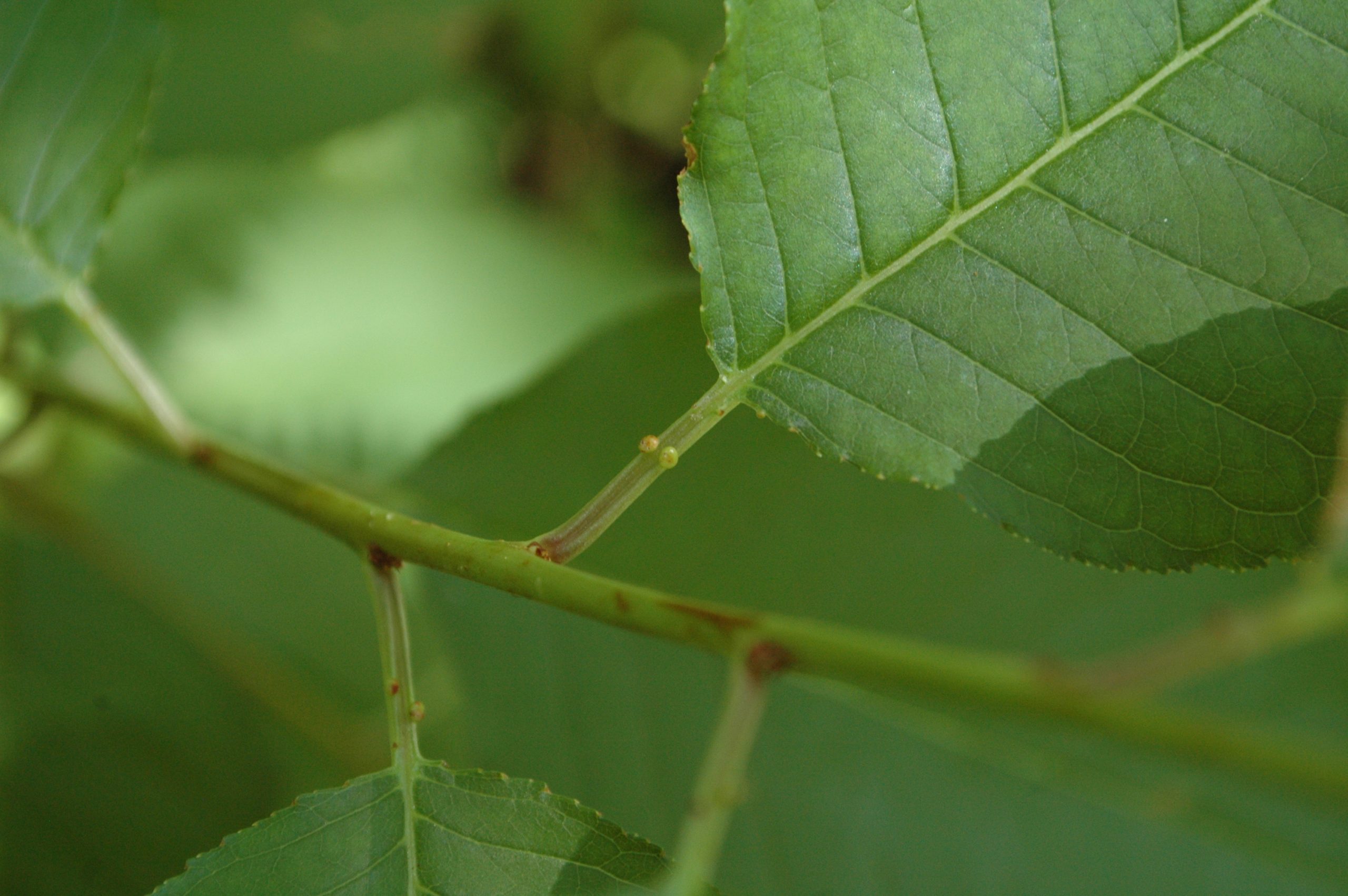
The best way to identify a Prunus is to observe the leaf and look for the “glands”. These are two small bumps on the petiole, often near or at the base of the leaf blade.
Serviceberry trees!
Like Prunus, serviceberries (Amelanchier spp.) are popular garden plants, but many native species can also be found in northern forests. The first clue to identifying serviceberries is that they flower slightly before apple and plum trees.
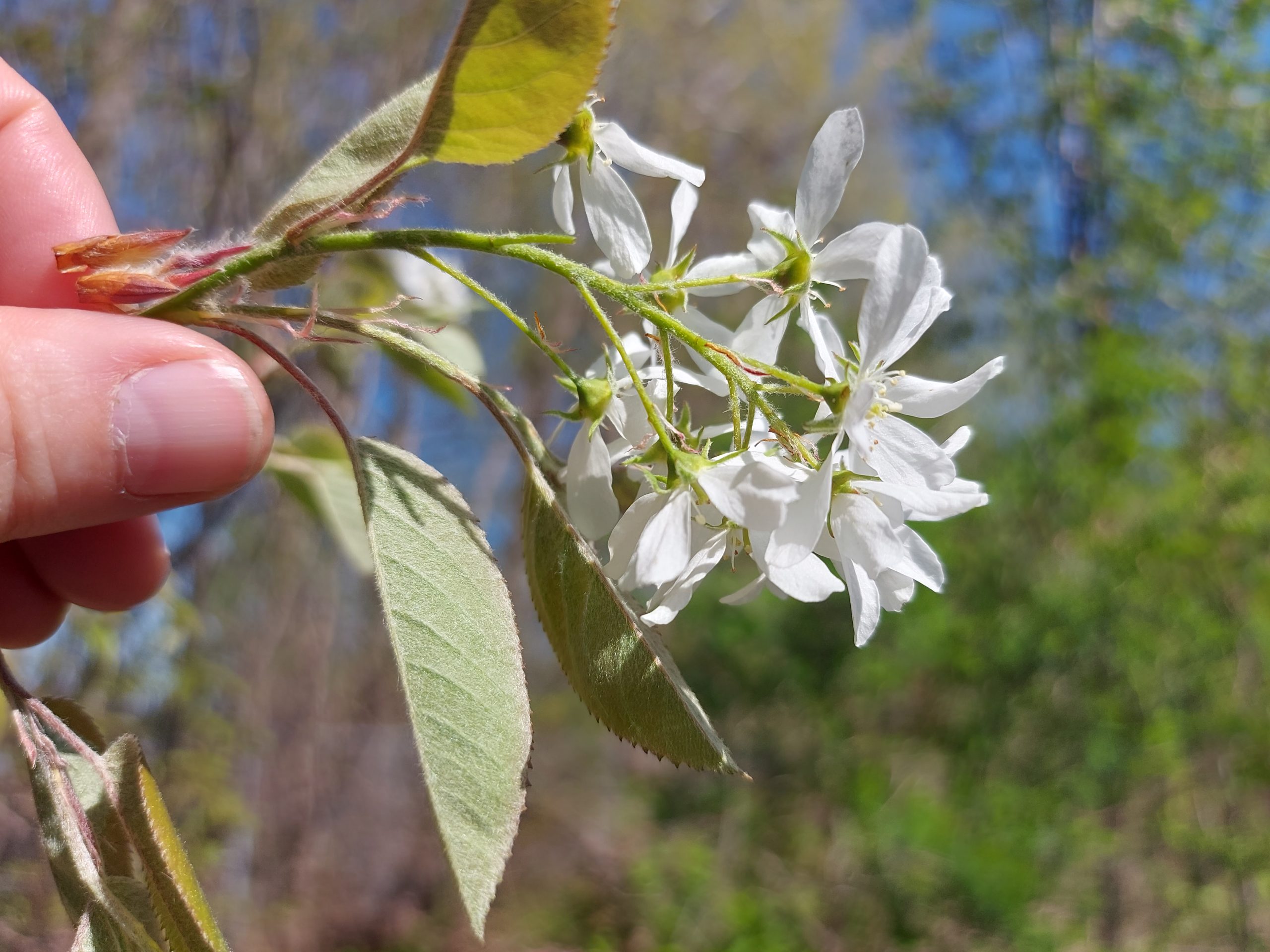
Serviceberry flowers are generally arranged in clusters that appear at the ends of young stems. Upon close observation of a cluster, you will notice that the peduncles (flower stalks) of the lower flowers are longer than those of the flowers at the top. This can help distinguish them from some cherry trees.
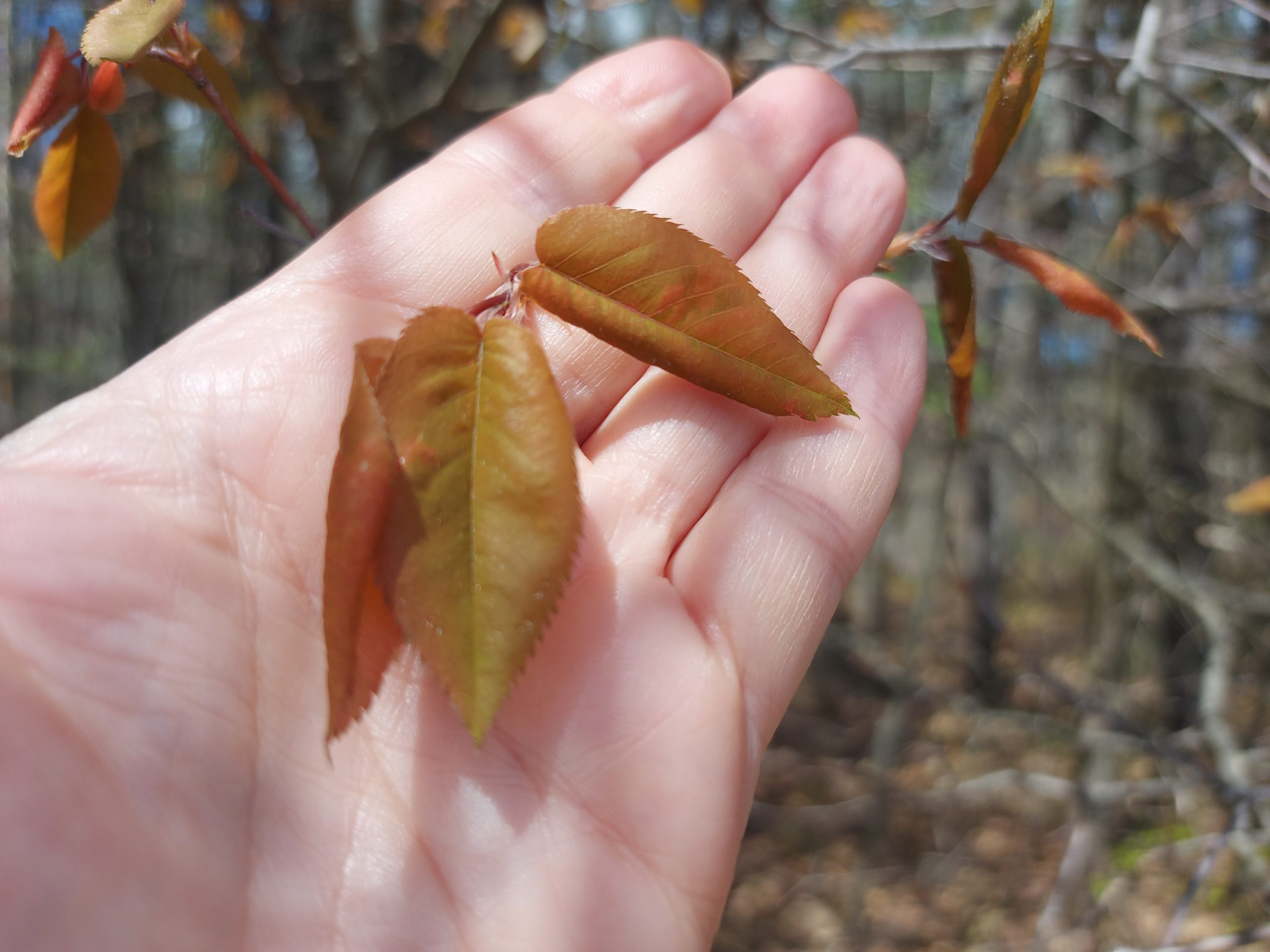
I also quickly distinguish serviceberries by observing the leaves. As they unfurl, serviceberry leaves often take on an orange or bronze hue. In some cases, the young spring leaves may be hairy. Also, the leaves are barely beginning to unfurl when the flowers appear. Once fully developed, the leaves are completely green. Some might say that the teeth along the leaf edges are small and regular, but this characteristic is also found in some apple and plum trees.
And sometimes, hawthorns!
On rare occasions, you might come across a tree that looks similar to an apple tree, but has leaves that look completely different. This could be a hawthorn tree. The best way to identify a hawthorn is to look for the thorns. Be careful—they are often long and very stiff. You can’t miss them. As far as I know, it’s the only tree in our northern gardens with such long needles.
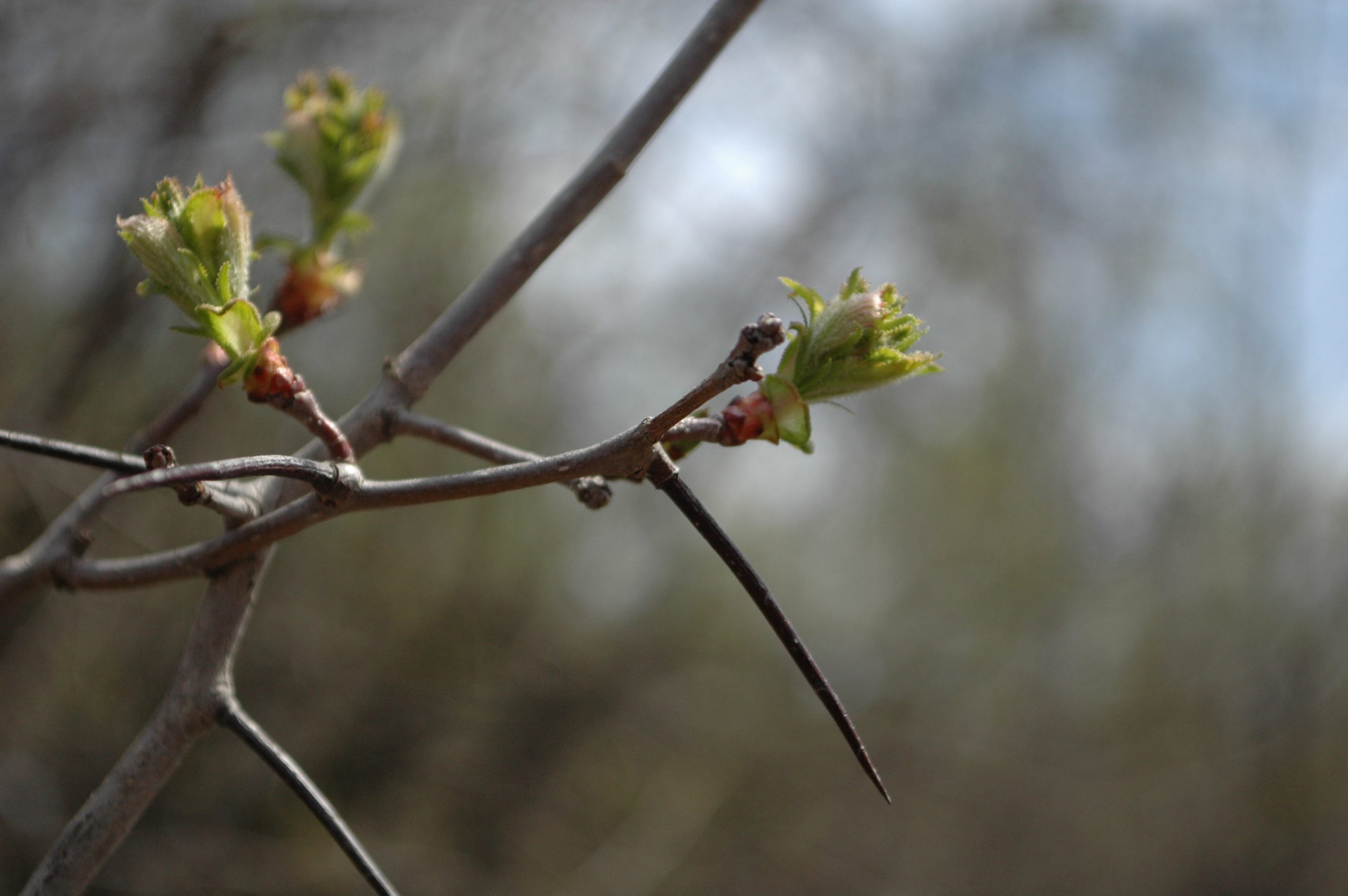
You’ll also find some ornamental varieties, as well as dozens of native species. In their natural habitat, hawthorns are rarely found deep within the forest. They generally inhabit sunny fields and the edges of forests.
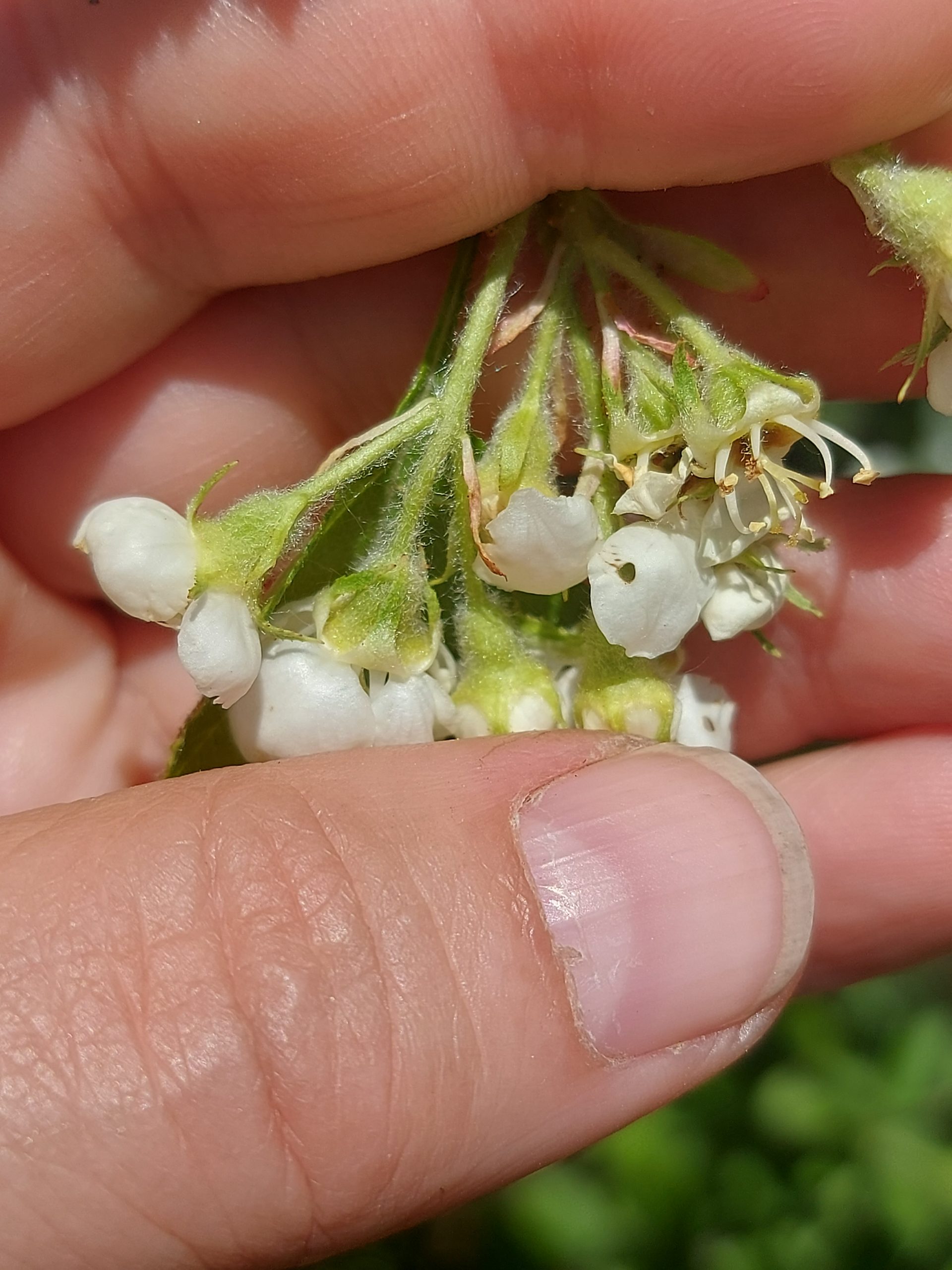
Another distinctive feature of some hawthorns is the coarseness of the teeth along the edges of the leaves. Some leaves are doubly toothed, irregularly toothed and sometimes lobed.
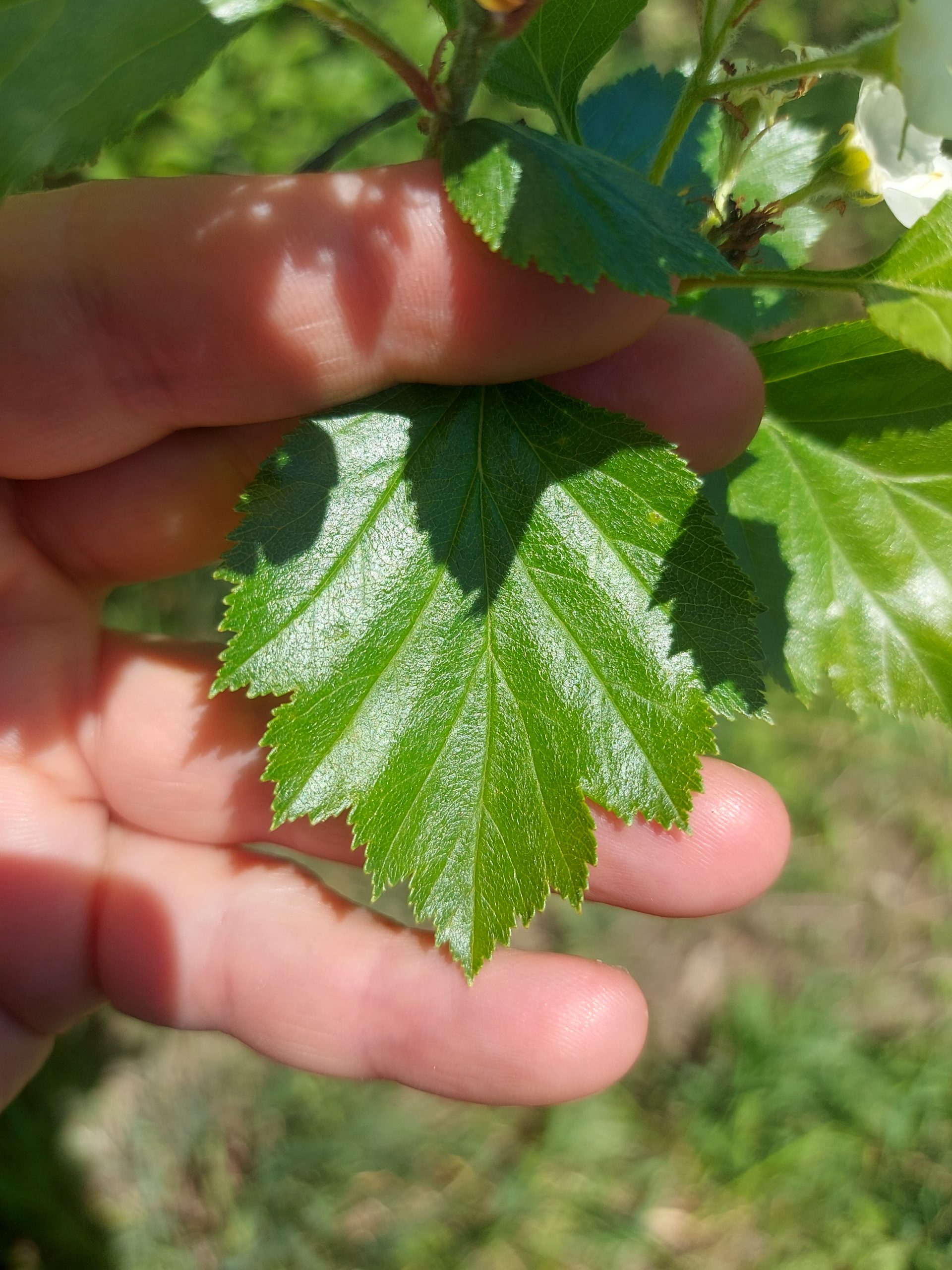
Finally, you may have noticed that this text uses the words “often”, “generally” and “sometimes” a lot, because together, these four plants represent hundreds of cultivars, varieties and species! There’s almost certainly an apple tree somewhere in the world that produces clusters of flowers, a cherry tree without glands and a hawthorn without thorns. Nevertheless, trying to differentiate between these plants is a fascinating challenge that can captivate and mystify us. Personally, I find it extremely difficult to distinguish between the different species of serviceberries and hawthorns native to Quebec. Hours of fun… and torture!
0 comments on “Is It an Apple Tree? A Plum Tree? A Serviceberry?”